
2026
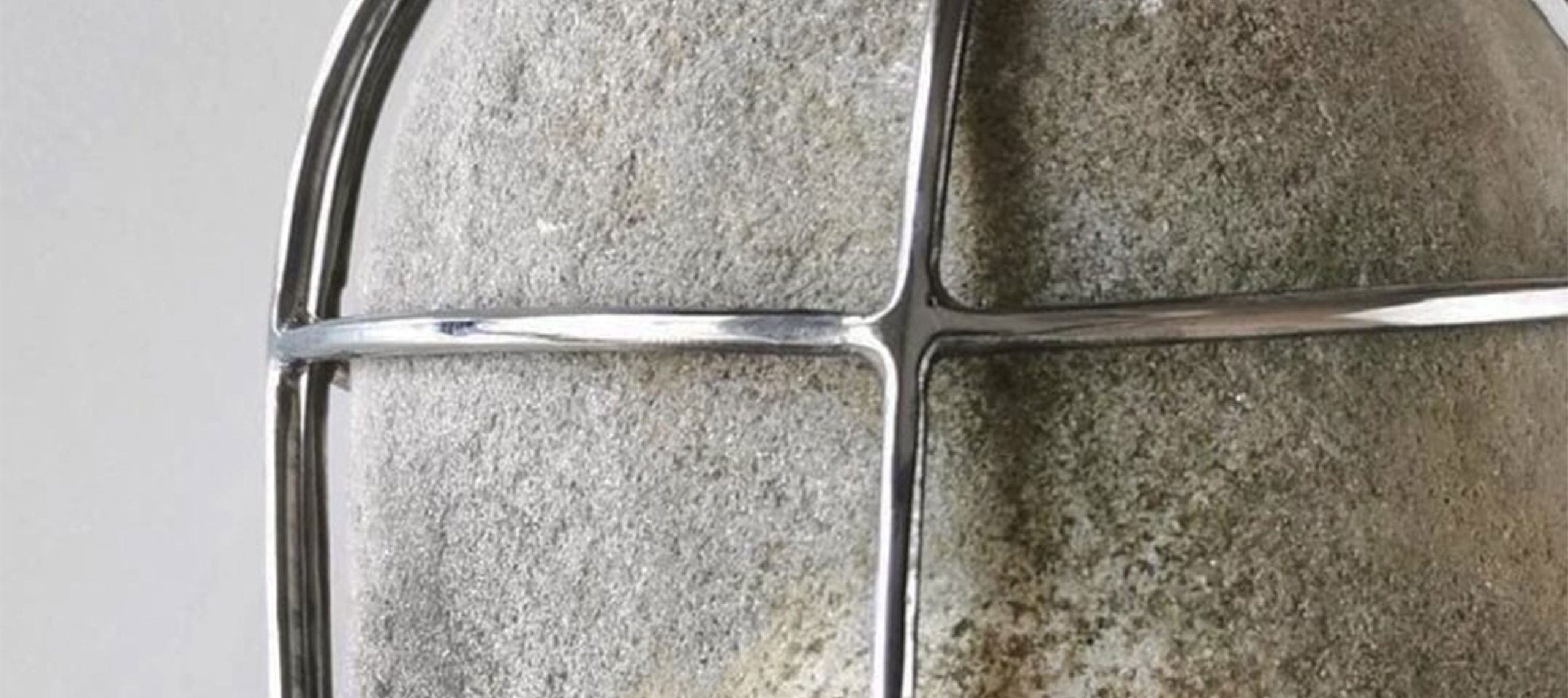
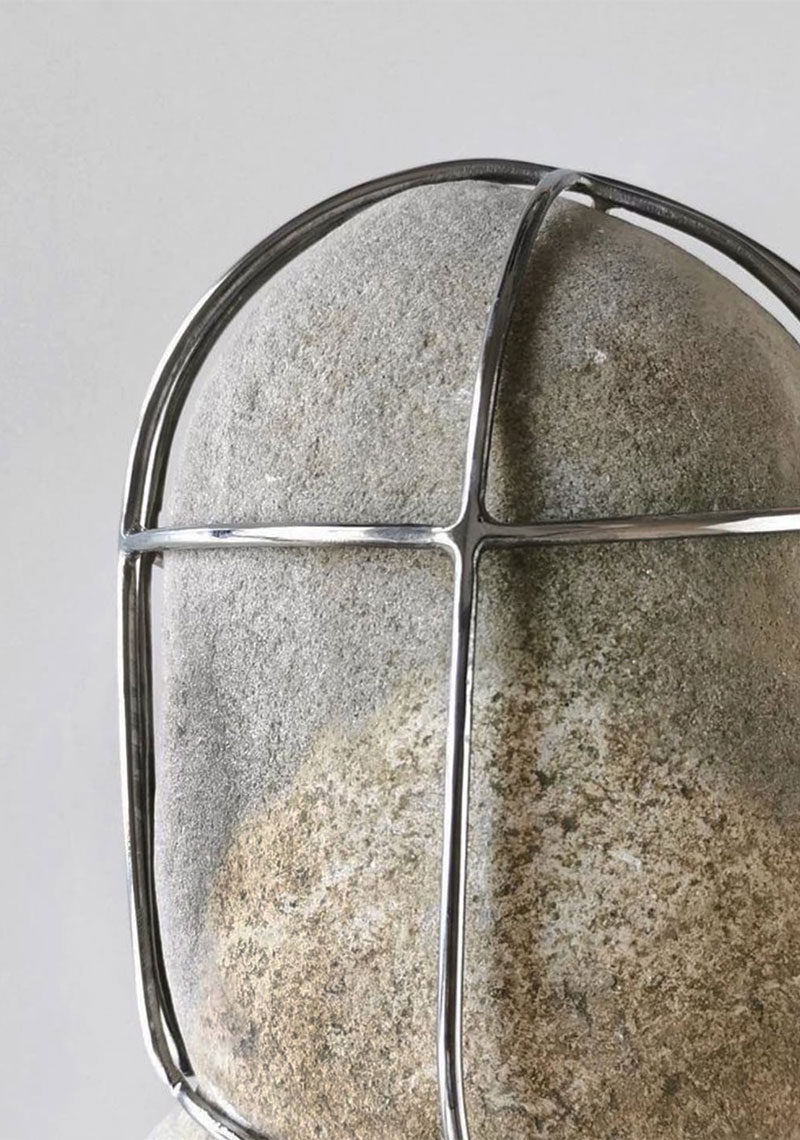
Before an object appears, before a surface is marked, or a volume is resolved, an inner disturbance emerges within the artist—a pre-reflective force that precedes intention and governs the act of making, refusing to remain internal. When does the intangible decide it needs a body?
The exhibition unfolds as a sensorial tapestry in which spirit reveals itself like a moving force—one that enters matter, inhabits it, persists within it, and is passed on from artist to viewer in a dance-like exchange of energy with irreversible effects. However, here, the spirit is not opposed to corporeality; it becomes visible precisely through contact, pressure, repetition, and accumulation. It is a material field shaped by forces that permeate corporeality, leaving lasting residues in their wake.
Across the exhibition, form emerges through antipodal modes of translation, equally opposed like corporeality and immateriality. Sometimes spirit is impressed through physical force, where tension, weight, and brutality shape material presence. Elsewhere, it is delicately woven through slow accumulations of marks and gestures mapping imaginary landscapes that unfold through density and touch rather than representation. In other instances, it is articulated through sharp precision, generating volumes that intrigue through clarity and resistance. At times, it appears almost whispering—a repetition that unfolds unhurriedly, becoming a hermetic, compelling mantra.
The exhibition maps a range of approaches positioned in a relation of polarity, through which the creative impulse takes form. The discourse oscillates, on one hand, between the direct exposure of raw force embedded in matter (Szilárd Gaspar), the repetitive rigor of gesture solidified into smooth graphite surfaces (Norbert Filep), and the categorical precision of a series of sculptural volumes that question scale and functionality (Radu Abraham).
On the other hand, it unfolds through the intriguing ambiguity generated by the obsessive layering of symbols that simultaneously construct micro- and macro- visual and semantic universes (Radu Oreian), a formal austerity that becomes a carrier of affect (Olah Gyarfas), the intuitive fragility of forms where media intersects (Sorina Cotea), and the use of corporeality as a tool for investigating the relationship between the individual and the environment (Nona Inescu).
Within this framework, anguish and the sublime converge, revealing the inevitable tension of human nature through a metaphorical juxtaposition of contrasting meanings, significations, and mediums, which coexist in a state of inseparable imperfection. Together, these artworks do not describe spirit; they embody its passage, its continuous movement toward permanence.
Corporeality is central to this process, as the body appears not as a site, but as a means of transmission to what we call spirit or impulse. Gesture, labour, and restraints operate as instruments through which inner impulses are translated into matter. Materials—paper, metal, textile, wood, stone—retain the memory of these interactions. Surfaces hold pressure, structures preserve tension, and layers resist haste.
Spirit circulates from body to material, from material to perception—marked by friction and contrast, leaving a residual trace that irreversibly alters the viewer, left under the spell of enchantment. The exhibition unfolds as a ritual space, where artworks appear as contemporary artifacts or archaeological exposures, bearing the soul of our times and the residue of lived experience. The surface between material and immaterial becomes porous through a sequence of acts with lasting consequences, where matter becomes the carrier of the inner impulse and the body becomes a mere interface between the self and the membrane of the world.
Artiști
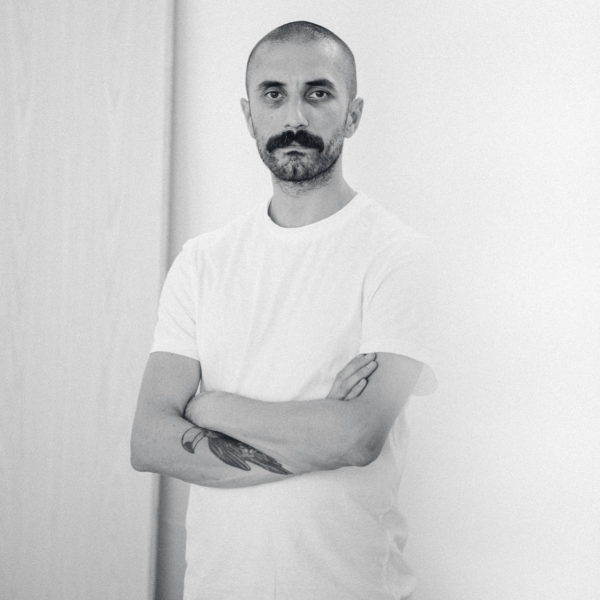
Radu Abraham
Radu Abraham (b. 1988, Cluj-Napoca) is an object designer whose practice is defined by a strong and contrasting aesthetic—a collage of wood, glass, metal, or plastic, used in varying proportions and associations. His objects, ranging from small collectible pieces to large-scale furniture, limited editions, or unique creations, build a coherent visual language with a robust volumetry, situated on the border between the functional and the sculptural.
His practice is anchored in process and material experimentation; the way materials react, their limits, and the way they can be put to work constantly guide his explorations, giving shape to honest objects in which both the intention and the method of construction are clearly legible.
In his finished objects, form often takes precedence over function, offering a distinct presence to each work. At the center of his creative process lies the actual execution—a meditative and manual approach that not only grounds the objects but also serves as a permanent source of inspiration.
He has participated with his works in various group and solo exhibitions, both in Romania and abroad.
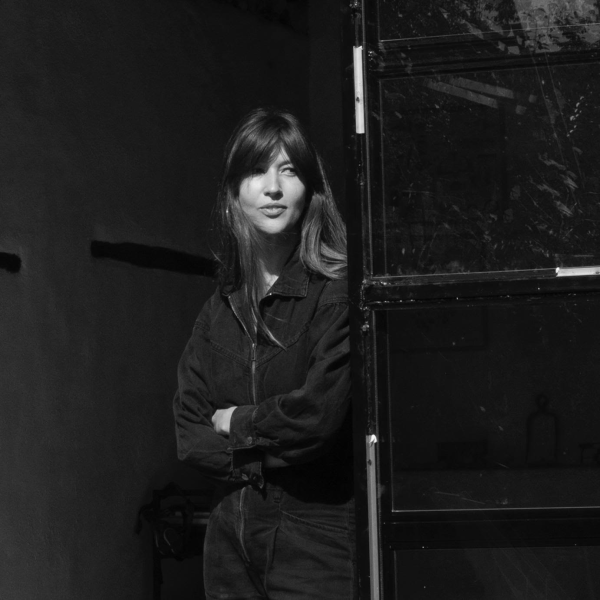
Sorina Cotea
I took my first jewelry course in 2017 in Bucharest, following five years of fashion and costume design. As an artist anchored in the specific practices and techniques of this craft, I explore the elementary nature of silver and bronze, through water and fire, using some of the most simple and universal tools. The intuitive probing of the world around me lies at the heart of my entire creative process—a subtle investigation of unveiling and revealing, deeply rooted in my undergraduate studies in Philosophy.
I intertwine elements of personal and archetypal mythology with generally abstract forms and structures, some of which are wearable. I experiment with wax, silver, bronze, and more recently with paper and text, in a kind of imaginative interpretation of the elements of the natural and cultural environment in which I find myself.
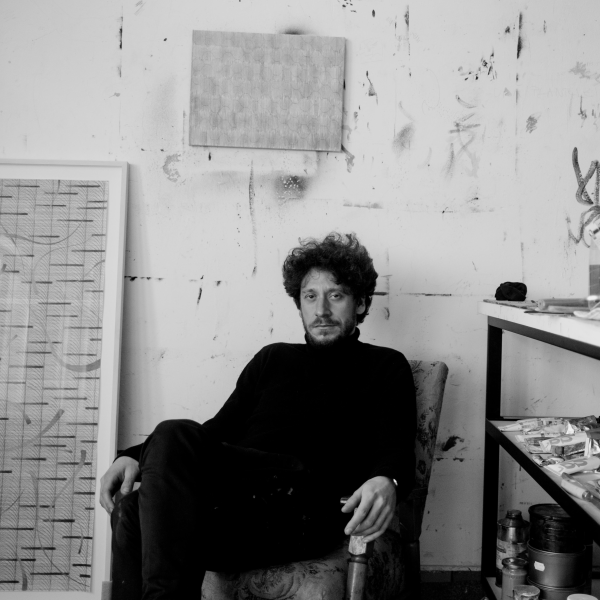
Norbert Filep
Norbert Filep is a Romanian contemporary artist who lives and works in Cluj-Napoca. In the past couple of years, his oeuvre went through different practices, mainly articulated by the use of the medium of drawing as a central mechanism for his conceptual approach to abstraction. Whether he uses simple lines traced by a ruler, grids taken from the basics of technical drawing, or texts borrowed from different art catalogs or magazines, his vocabulary relies on a simple concept defined by the information itself.
In such a way he is engaged in discovering new possibilities in abstraction, by redefining different processes of generating information through accumulation and repetition. Thus, the outcome is defined by different series of works, constructed in several layers of graphite or sometimes other materials, such as glass, revealing his abstract territories where the viewer is encouraged to decipher the slowly revealing dialogue between the material, tools, and the process that generate delicate fluctuations inside the work’s network.
The apparition of volume, elevations, marks, and bends in fiber, results of the interaction between the elasticity of cellulose and hard graphite pencils, square rulers or stencils, reveal the sculptural tactility of the works, marked by the obsessive process of applying the layers meticulously in an absurd way, similar to the absurdity of our digital society.
From his point of view, our society is lying at the most important point in history; a point where everything is getting more and more accelerated and immaterial, and such physical dimensions which constructed our past society are fading away… this is the main reason why I chose the exploit these fields (technical drawings, texts, books, etc.) because these are the fields that once had drawn our society, our houses, our cars, our everyday objects. Today, they seem to be all calculated….
Among his solo exhibitions are: Mapping the paper, Sector 1 Gallery, Bucharest, 2018; Simple things, Pilot Art Space, The Paintbrush Factory, Cluj-Napoca, 2018; One after another, Mie Lefever Gallery, Ghent, 2019; Art Rotterdam Fair, Rotterdam, 2020.
His works have been included in several group exhibitions: The little thing that counts, MARRA/NOSCO Gallery, Brussels, 2022; Mirror, Mirror, CFHILL, Stockholm, 2021; Electric Crossroads, Bubble n Squeak, Brussels, 2021; After 12 Years, National Museum of Contemporary Art (MNAC), Bucharest, 2020; Out of blue, Museum of Recent Art, Bucharest, 2020; Mother Tongue, Sector 1 Gallery, Bucharest, 2019. His works are included in private and public collections such as The National Museum of Contemporary Art (MNAC), Bucharest, The Museum of Recent Art, Bucharest, and The ING Collection, Bucharest.
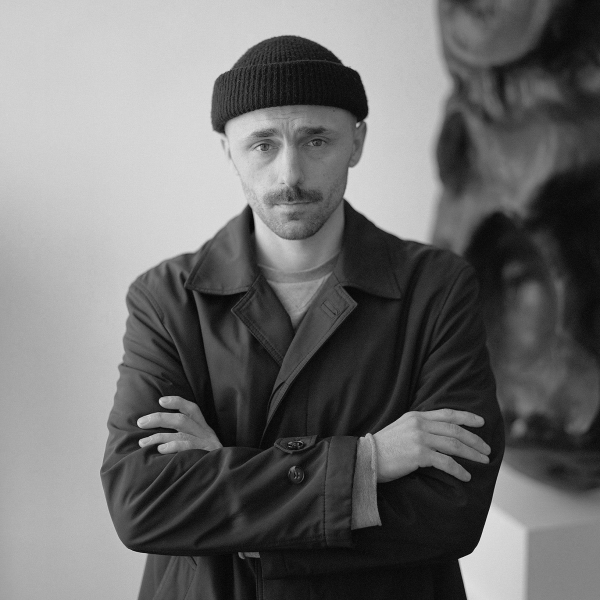
Szilárd Gaspar
Szilárd Gaspar is a sculptor and performance artist, and a former professional boxer. He studied sculpture at the University of Art and Design in Cluj-Napoca, where he developed his artistic practice toward researching the body as a sculptural and performative medium.
His artistic approach investigates the relationship between body, materiality, and action, addressing the tensions between strength and vulnerability, discipline and exposure, control and loss. His practice is situated at the intersection of sculpture, performance, and artistic processes oriented toward direct physical experience, in which the body becomes both the subject and the instrument for producing meaning.
His work has been recognized through the “Constantin Brâncuși” Fellowship (2023), as well as the Esterházy Art Award, granted at the Ludwig Museum – Budapest (2025). His works have been presented in national and international exhibitions and performative contexts.
He lives and works in Cluj-Napoca.
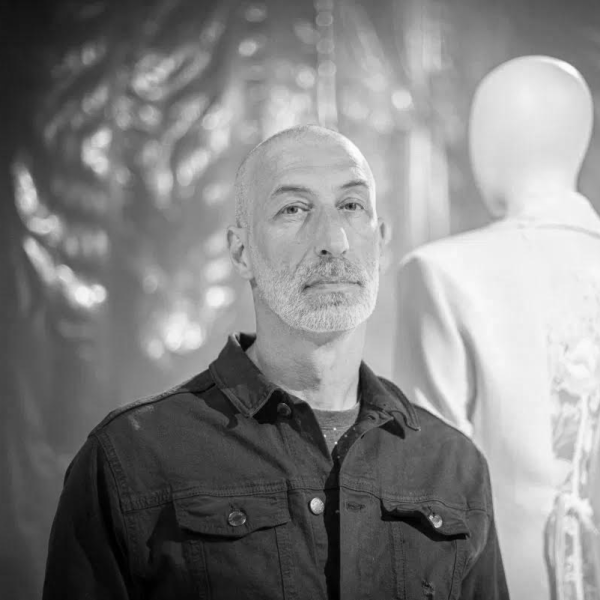
Oláh Gyárfás
Designer and artist Oláh Gyárfás brought to life the Romanian anachronistic fashion brand Rozalb de Mura. He was the creative power behind the Patzaikin brand, combining fashion with ecotechnology. A universe of pink white surrounded by berries, white hemp and linen, rich yellow. Mixing a contemporary attitude with stardust. As he put it, simply: ‘I took the risk of going modern.’
Oláh Gyárfás has always worked with a baroque-inspired aesthetic, balanced by a comforting, austere minimalism. His spiritual journey took place between the seduction exerted on him by his mother’s tailoring workshop and a Rei Kawakubo type of rebellion. The duality of these two worlds still preoccupies him, as does the play between seduction – anarchy, art – fashion, design – sculpture, item – multitude, identity – trends carried by the wind…
Oláh Gyárfás is interested in space, nature, abstract details and the sculptural qualities of texture. Through sculpture, he tries to develop this dual logic, generating well-thought partitions and affective shifts. What remains is color – white, texture – hemp, the array of elegant forms. Structured in a conceptual manner, his work is altered only by a profound sense of emotion. Seen as enigmatic, for him, sculpture remains an aesthetic challenge.
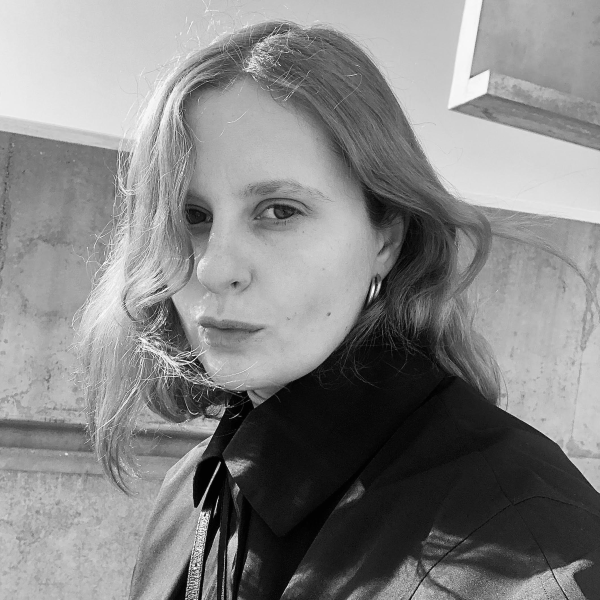
Nona Inescu
Nona Inescu (b. 1991) lives and works between Athens, Greece, and Bucharest, Romania.
She completed her studies at the National University of Arts in Bucharest, following her education at the Chelsea College of Art & Design in London and the Royal Academy of Fine Arts in Antwerp.
Her interdisciplinary artistic practice includes photography, installation, sculpture, and video works. Based on a theoretical and literary perspective, the works focus on the relationship between the human body and the environment and the redefinition of this subject in a post-human key. The mediating properties of the body are rendered in several ways, projecting a translation of the world driven by affect, signaling its position as an interface between self and reality. Concepts of geological time and our intense interrelation with our surroundings compose an aesthetic of a primal contemporary togetherness in an organic and biological techno-sphere.
Recent exhibitions have taken place at Catinca Tabacaru Gallery (Bucharest); Musée de l’Homme (Paris); Haus N (Athens); Gunia Nowik Gallery (Warsaw); Kunstlerhaus Wien (Vienna); Lentos Kunstmuseum (Linz); Kandlhofer Galerie (Vienna); Salonul de Proiecte (Bucharest); Brooke Benington (London); Sylvia Kouvali (London); Goethe Institut (Bucharest); Le CAP Saint-Fons (Lyon); Kunstraum Kreuzberg (Berlin); Musée de l’Art Moderne et de l’Art Contemporain (MAMAC, Nice); Radius (Delft); Spazio A (Pistoia); Art Encounters Biennale (Timișoara); KVOST (Berlin); Contemporary Fine Arts (Berlin); basis (Frankfurt), Tallinn Art Hall (Estonia), and Museo della Montagna (Torino), among others.
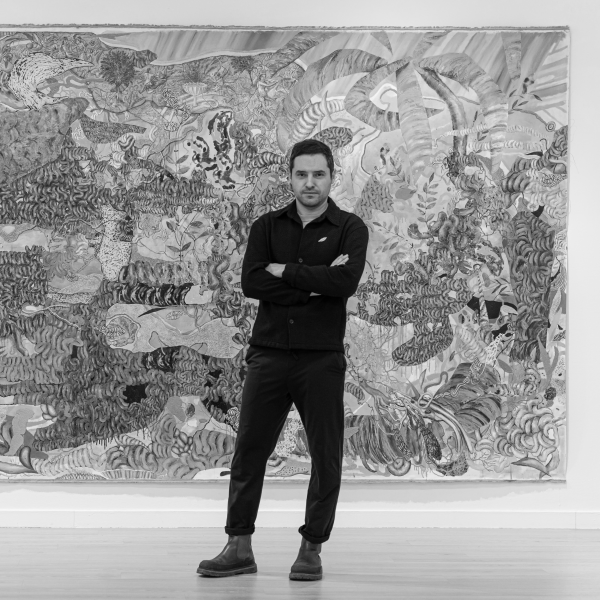
Radu Oreian
Radu Oreian (b. 1984, Tarnaveni, Romania) currently lives and works in France. He awarded his first degree in 2005 at the University of Art and Design of Cluj-Napoca and he continued his studies at National University of Art of Bucharest where he graduated in 2007.
Radu Oreian’s practice has at its core the classical mediums of drawing and painting and explores the way history, ancient myths and archives shape our society and our understanding of humanity. His ‘Molecular Painting’ are a miniature-like format of works that pulsate with details and thus intend to draw the viewer’s eye deeper and deeper into the fabric of the paint and hopefully deeper and deeper into the nature and meaning of painting.
The red thread that runs through Radu Oreian’s works is creating a new, meditative visual imprint of a peculiar density that appears to exist in a pulsing state of tension and relaxation. Radu Oreian has been the protagonist of several solo-shows: 1969 Gallery, That magic light (New York, 2025), Gallery Nosco, Thiars, fountain of youth (Brussels, 2023), albertz benda Gallery, The wanderers (L.A., 2023), 1969 Gallery, A sea of green and blue (New York, 2022), SECCI Gallery, limone limone (Milano 2021), SVIT Gallery, Befriending the memory muscle (Prague, 2020, with Ciprian Mureșan), Gallery Nosco, Microsripts and Melted Matters (London, 2019), Gallery ISA, Farewell To The Thinker of Thoughts (Mumbai, 2018).
Among his institutional projects: Looking Anew and Beyond: Contemporary Romanian Art from the Collection of the Arthur Taubman Trust, Taubman Museum, (Roanoke, West Virginia), La Fondazione (Roma, 2020, solo-show), The Last Agora, Plan B Foundation (Cluj-Napoca, 2019) and Chasseur d’Images, Musée de la Chasse et de la Nature (Paris, 2019). Among his group shows: The three graces, Unit (London 2024) and On The Sex of Angels, Nicodim Gallery (Bucarest, 2017).
Radu Oreian is represented by 1969 Gallery, Eduardo Secci and Gallery Nosco. Oreian’s works have been acquired by Taubmann Collection (Roanoke), La Foundazione (Rome), Sandretto Collection (Milan), Alberto Cehlebar (L.A.), Scott Mueller (Cleveland), Ian Gazes (Miami), Bogdan Roscic (Vienna), Arun Nayar (London).
Curator

Andra Handaric
Between the roles of curator, artist, and designer, Andra Handaric investigates through her practice the concept of intersection as a modus operandi. With a background spanning art, design, and curatorial studies, her approach is shaped as a perpetual inquiry into the tensions that arise in the space between/in a continuum in-betweenness, in which she seeks to capitalize the symbolic potential of objects and form as narrative.
She studied at the Istituto Europeo di Design (Barcelona), the University of Art and Design in Cluj-Napoca, and École Supérieure d’Art et Design Saint-Étienne, consolidating her transdisciplinary perspective through a recent master’s degree in Contemporary Curatorial Practices (UAD).
The intersections between artistic practice, material culture, and theoretical research are investigated through a series of curatorial projects engaging with design objects, conceptual art, and discourses on identity.
Her recent curatorial projects, art/if/acts. Liminal Territories and art/if/acts. Spirit, Residual, reflect her interest in the dialectics that shape existence in contemporary society: body and spirit, materiality and transcendence, process and presence. The exhibition proposes a reading of creation as a continuous becoming, as a negotiation between the functional, aesthetic, symbolic and spiritual dimensions.