
2026
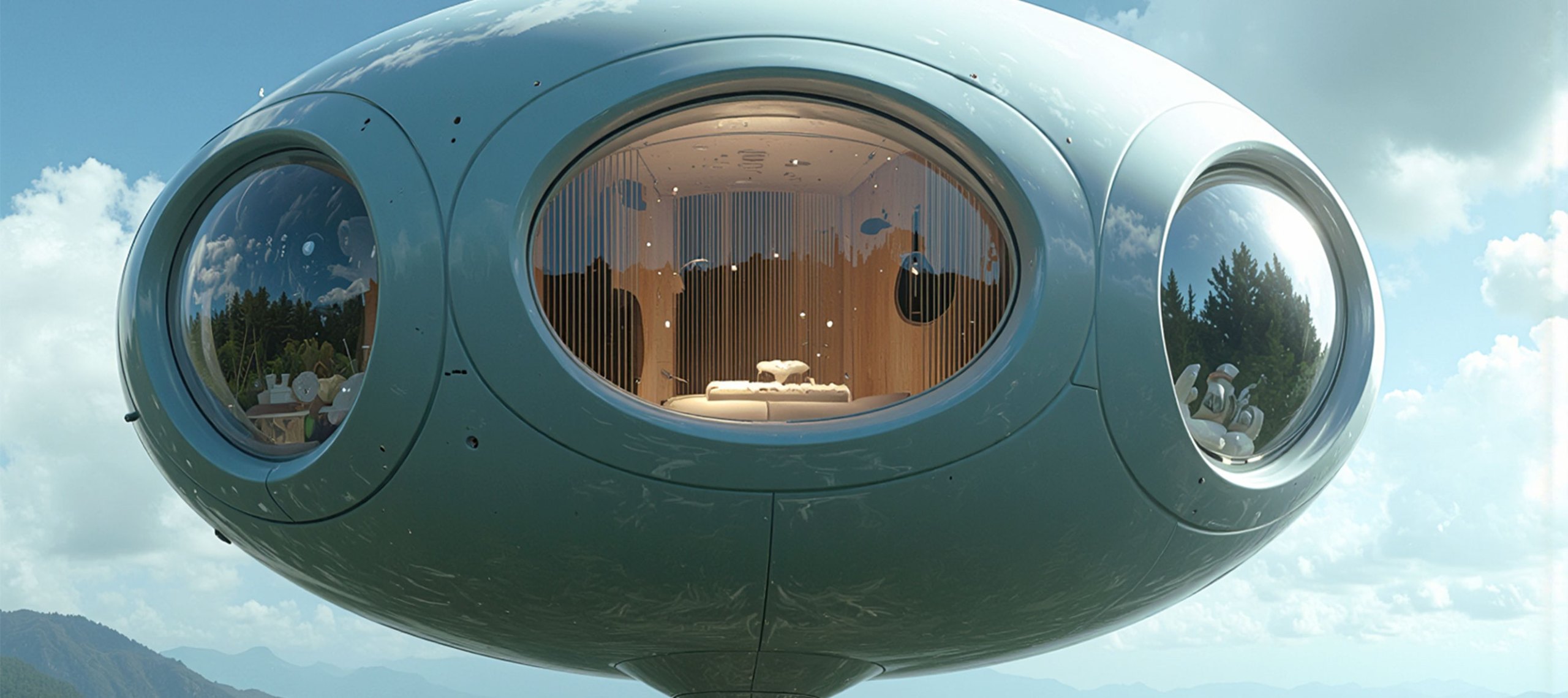
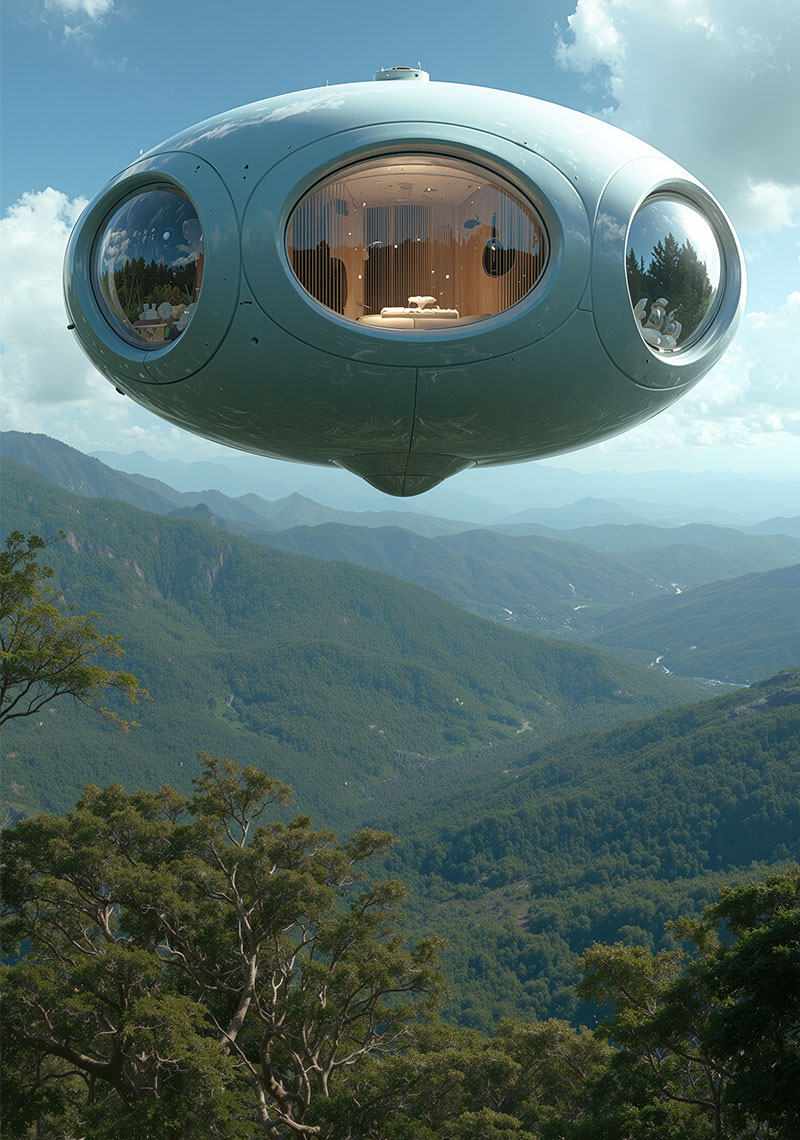
The future is a field of overlapping possibilities, a rhizomatic territory in which the virtual is continuously actualized through contact with the gaze, technology, and the affective memory of each of us. Personal and collective imaginaries are being shaped in an era where “what could be” scenarios are mediated by algorithms: predictive models, generative systems, and interfaces that propose alternative versions of our own existence.
Arturo Arvizu chooses to work with AI as a tool for stimulating creativity. Arvizu’s practice is rooted in painting; for years, the artist worked predominantly in oil on canvas, developing a figurative language centered on the body, identity, and presence. The direct relationship between hand, matter, and image remains essential to his approach. The introduction of artificial intelligence into his process does not mark a shift in direction, but rather an expansion of this visual inquiry toward a new type of instrument. The result is a series of scenarios of possible lives, projections of destinies that belong to no one and, at the same time, to everyone. Just as for Michel Foucault the body was a field of inscription for power, in Arvizu’s work, the future appears as a field of inscription for data: a space where the power to calculate and the power to dream converge.
The artist constructs this reflection through a multimedia approach: painting, video, and installation. Painting functions as an anchor in tradition; the surface of the canvas preserves the gesture, the layering, the hesitation, and the revision, reminding us that, beyond the algorithm, there remains a hand that selects, corrects, rejects, and creates. The video introduces the dimension of the fluid present: sequences of images that transform slowly or abruptly, frames that seem to capture fragments of dreams, reality tests, and screens on which the future is never clear, but always in the process of becoming. The installation extends this universe into physical space, inviting the viewer’s body to engage with these scenarios. The video works transform the viewer into an active participant: the time spent before a screen becomes part of the “writing” of the work. Thus, the visitor is no longer a passive consumer of images, but a co-author of borrowed futures, lived intensely for a few moments, then left behind, like a dream that continues to resonate within the memory.
Arturo Arvizu invites us to reflect on our relationship with time, identity, and community. The future, as presented here, is an open field of negotiation in which each visitor is invited to assume, if only for a moment, the responsibility of their own borrowed futures. Within the context of Romanian Creative Week and the presentation at Galeria Artep, this exhibition proposes a compelling dialogue between a consolidated pictorial practice and the emerging technological tools shaping global visual culture. Arturo Arvizu’s presence brings a perspective where technology is neither celebrated nor demonized, but critically integrated into an already mature artistic process.
Curator,
Cristiana Ursache
Artist
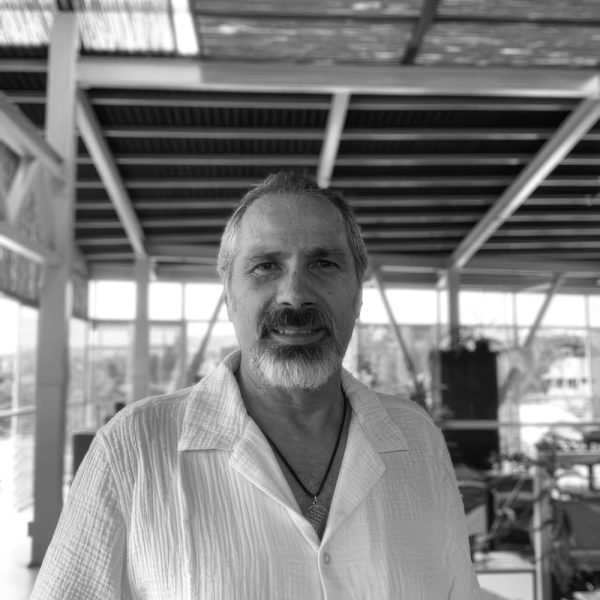
Arturo Arvizu
After more than fourteen solo exhibitions and nearly four decades of painting, this artist approaches art as an open and evolving journey—one guided by curiosity, intuition, and continuous discovery. For them, painting has become more than a practice; it is a way of understanding both the self and one’s place in the world.
A sense of wonder has always been central to their work. Over time, their attention has shifted toward the subtle and often unseen—hidden symbols, quiet signals, and energies that seem to exist beyond ordinary perception and language. Their paintings explore this delicate territory between the visible and the invisible, where intuition, coincidence, and meaning intersect.
For the artist, painting sometimes feels like touching something larger than the self—moments where time briefly dissolves and clarity emerges. At the same time, their work reflects an awareness of how human perception shapes reality, inviting viewers to question what lies beyond the limits of what we normally understand.
Recently, the artist has begun exploring the intersection between traditional painting and artificial intelligence. Rather than viewing AI as a replacement for human creativity, they approach it as a new creative tool and collaborator—one that opens alternative ways of seeing, thinking, and perceiving reality. Through this evolving dialogue between art and technology, their practice continues to expand, connecting decades of experience with new possibilities for the future.
For them, painting remains a lifelong path—one built through patience, trust, and the belief that the act of creating itself carries meaning.
Curator
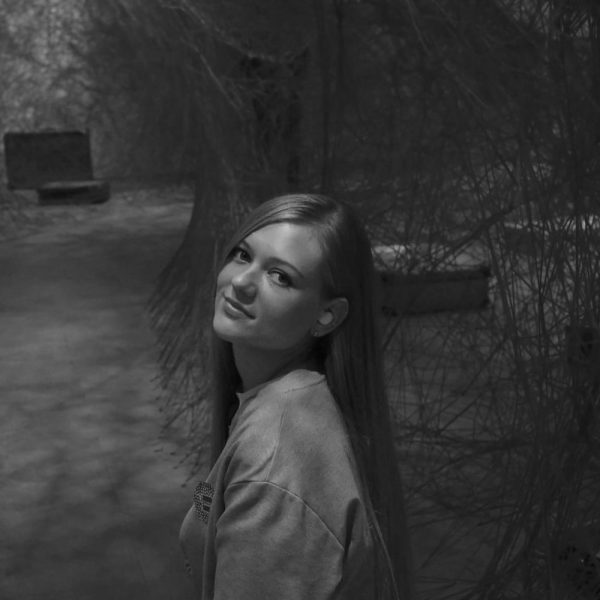
Cristiana Ursache
Cristiana Ursache is a curator based in Iași, Romania. She holds a Bachelor’s and a Master’s degree in Art History from the “George Enescu” National University of Arts in Iași, where since 2023 she has been pursuing a PhD focused on curatorial practices in Romania after 2000 and teaches seminars in aesthetics and curatorial studies.Since 2022, she has been a curator at Artep Gallery. In 2023, she served as a cultural mediator for the Romanian Pavilion at the Venice Biennale and coordinated the cultural mediation program for the exhibition of artist Ștefan Câlția at Garrison Chapel in London. She has participated in study and research programs in Seville, Zürich, and Berlin, and has received research residencies and fellowships in Iceland, Germany, and Argentina.