
immersive installation
limited access
2026
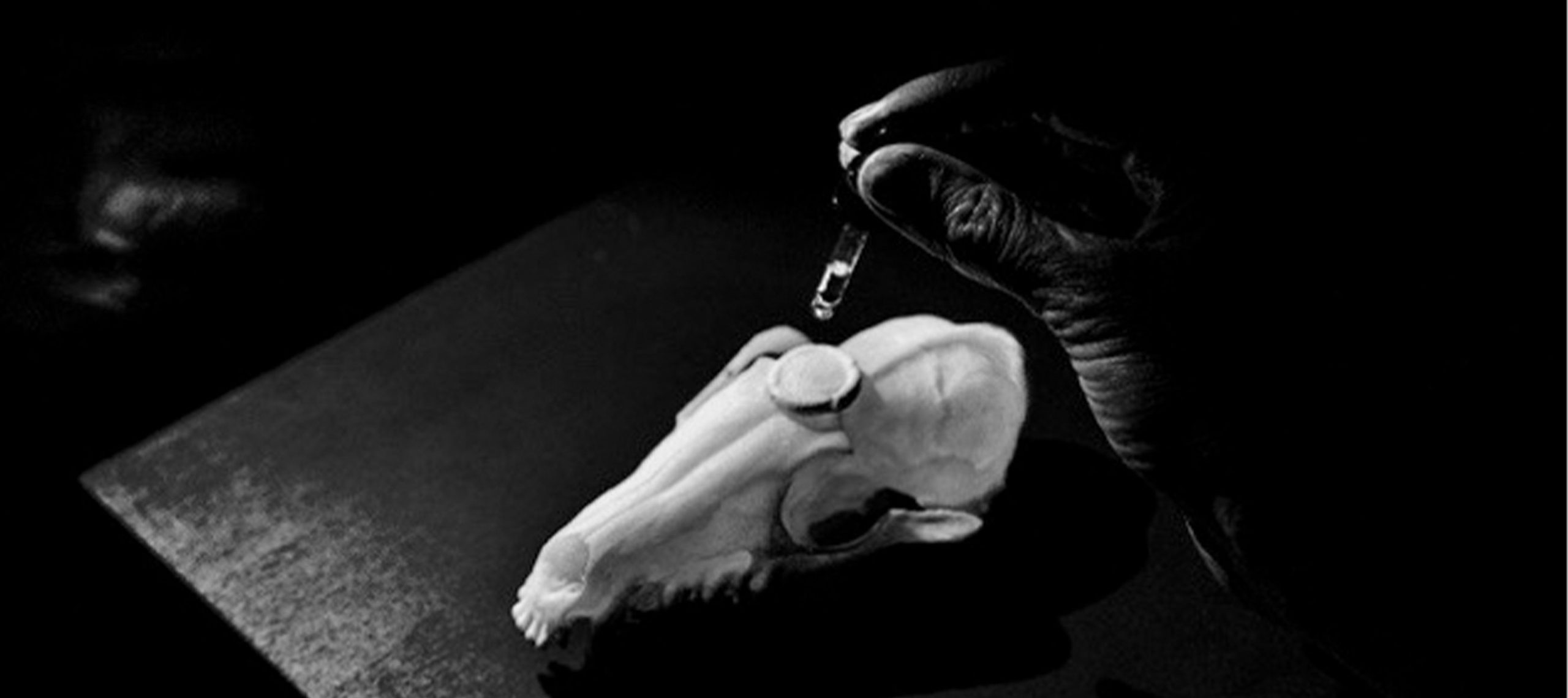
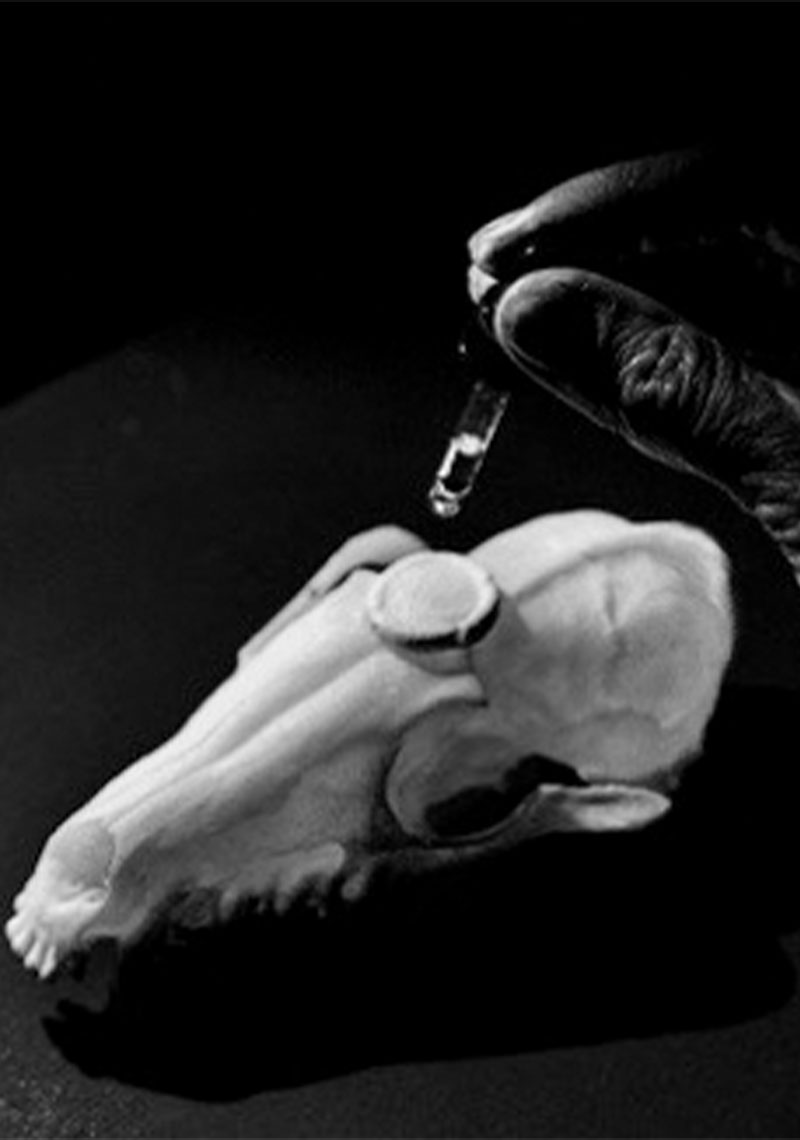
In a given framework of internalised terror, what is the exit, a possible delusional scenario to be manifested as an alternative narrative, as a glitsch of history? Do we dare an escape from the matrix or do we comply with comforting #delulu strategies?
“Tales of the Dead” is the final phase of Elena Urucatu and Carlos Maté’s opera cum multidisciplinary project „The Year Without a Summer“. Its name originates from the historical 1816 volcanic winter caused by the eruption of Mount Tambora—a global climate catastrophe that led to famine, disease, and a sunless year, coinciding with the rise of Romanticism’s melancholic sensibility. The installation unfolds as an immersive, scent-based opera and an accompanying exhibition that examines the physical traces left behind, conjuring a “punk and techno 19th century” where the gallery becomes a space of subjective excess shaped by memory, distortion, and mimicry. Drawing from the legendary 1816 ghost-story competition at Villa Diodati that gave birth to Frankenstein and The Vampyre, the work weaves themes of extinction, confinement, and sanctuary into an autopsy-like display of its own operatic remnants, using the Romantic spirit as a form of individual resistance against late capitalism and digital saturation—asking whether art can still offer refuge in an age of algorithmic capture. As curator Laura Lopez Paniagua writes: „ Video screens and Marshall amplifiers, perfumes and Romantic memorabilia, monsters and the ruins of a false classicism are presented as an archive. Their fragmentation evokes the workings of memory: once events have ocurred, only remnants remain – mementos from which to reconstruct the story that was, or perhaps invent new ones altogether. This repetition of the opera is not only imperfect but willfully manipulated – a distorted echo, a personal hallucination, a wold of one’s own making”.
Schedule
Wednesday, May 13: 1:30 PM-3:00 PM-4:30 PM;
Thursday, May 14: 12:00 PM; 1:30 PM; 3:00 PM; 4:30 PM
Friday, May 15: 12:00 PM; 1:30 PM; 3:00 PM
Saturday, May 16: 12:00 PM; 1:30 PM; 3:00 PM; 4:30 PM
Sunday, May 17: 12:00 PM; 1:30 PM; 3:00 PM; 4:30 PM
Limited access, registration required. Registration link will be published on April 30.
Artist
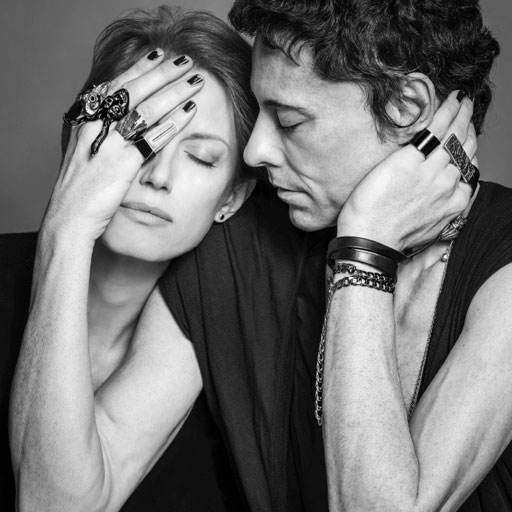
Elena Urucatu and Carlos Maté (RO, ES)
Elena Urucatu and Carlos Maté are a Romanian–Spanish artist duo based in Berlin. Their practice spans objects, sound, video, marine biology, perfumery, mixology, and cooking. They create performative experiments and experiential installations through collaborations across disciplines that often lie outside the realm of art.
Through these collaborations, they propose the construction of a new subjectivity: a radical perspective that transforms our digital, temporary, reference-less selves into vital refuges. Their work generates intimate, obscure, and psychological spaces in the melancholic tension between the universal and the individual. Here, art becomes the only survival strategy in the ruinous moral landscape of late global capitalism—the fragile thread that keeps us connected to a collapsing world.
Exhibited internationally, their projects have been presented at Triennale Milano, Haus der Kulturen der Welt and Círculo de Bellas Artes, as well as in the context of the Ljubljana Biennale, Istanbul Biennial, and Berlin Biennale. Their awards and residencies includenMedialab-Prado and Irish Museum of Modern Art (IMMA).
Curator
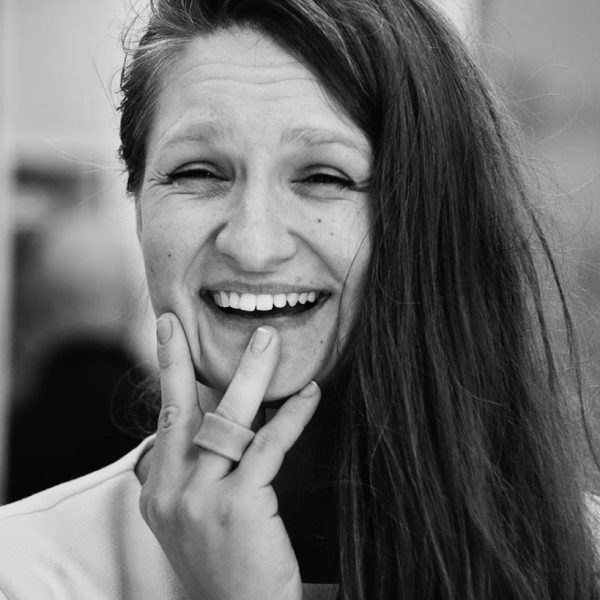
Marlene Herberth
Marlene Herberth works across artistic and curatorial practices, constructing projects as living systems. Drawing from anthropology and vernacular archives, she weaves ritual, fiction, and political fracture into immersive environments where memory is referenced as inspiration for the future. Working with fragments — objects, symbols, textiles, archives — she builds affective architectures that connect microhistories with collective imagination, activating heritage as an infrastructure for transformation. She is co-founder of KraftMade Research & Lab alongside Alex Herberth, creating heritage-led programs from rural Transylvania, where community, landscape, and history are active collaborators in their practice.