
On Power and Myth
exhibition
2026
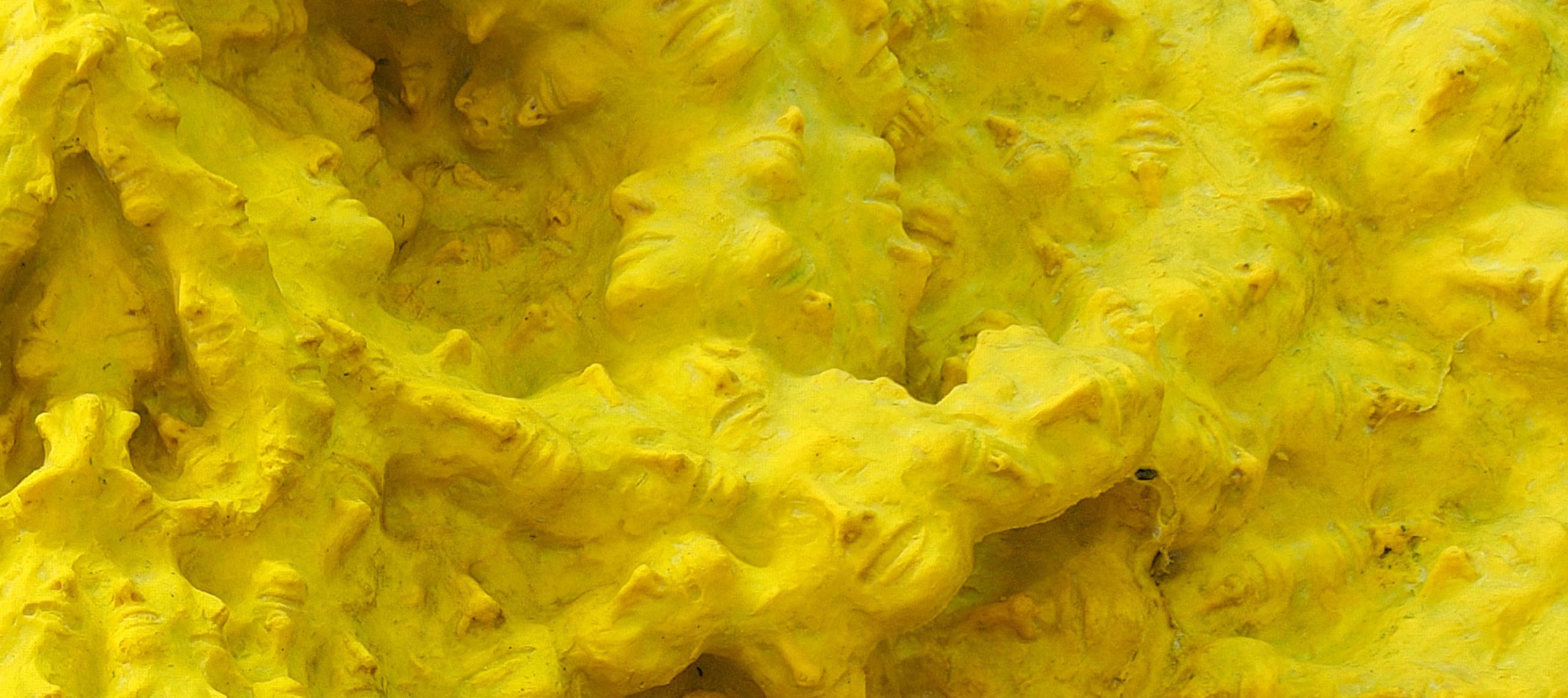
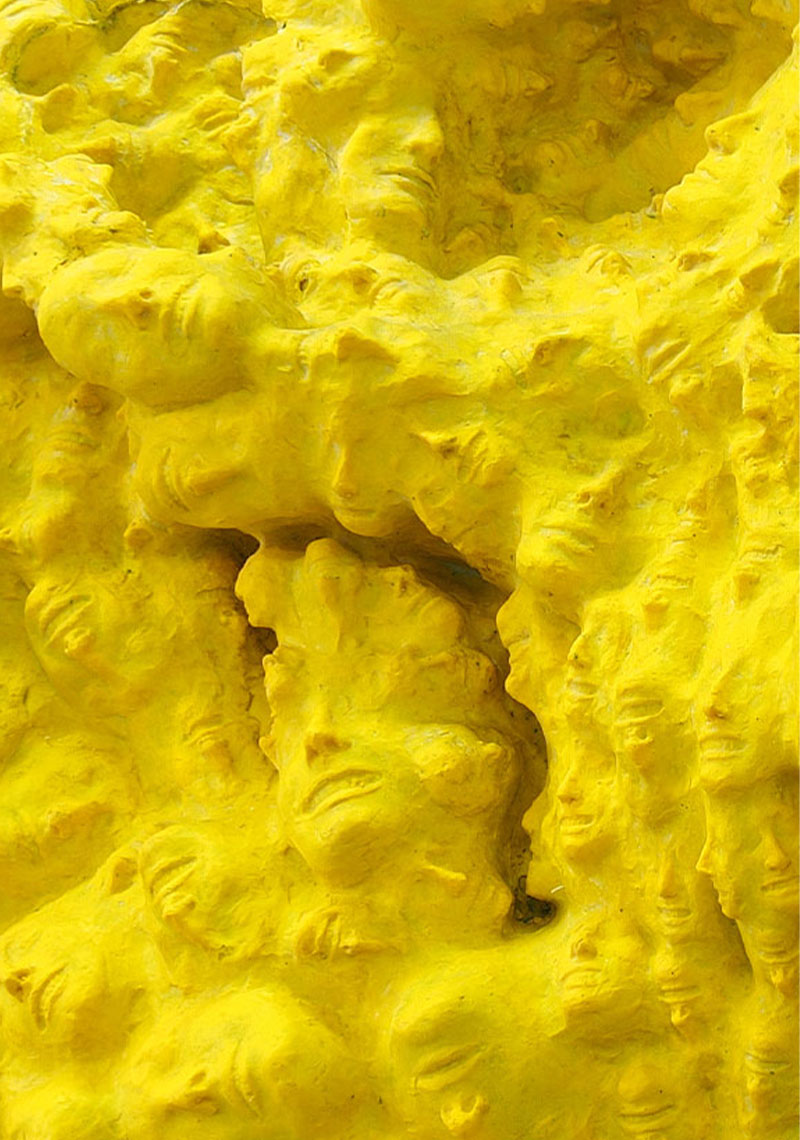
Power has never functioned through force alone. It depends on a fragile architecture composed of subjects, resources, rules, institutions, and—above all—legitimacy. As Max Weber articulated in Economy and Society (1922), domination endures only insofar as it is believed in. Within this matrix, fear operates as a primary technology of governance: a mechanism designed to produce obedience, internalize norms, and stabilize belief.
First published in 1487, the Malleus Maleficarum—the notorious Hammer of Witches—offers a stark historical example of how fear is translated into doctrine and law. Written by Heinrich Kramer (with disputed attribution to Jacob Sprenger), the treatise systematized suspicion, codified violence, and provided juridical and theological justification for the persecution of alleged witches. While not the sole cause of the European witch hunts, its influence during the 16th and 17th centuries was profound, shaping both ecclesiastical and secular prosecutions across large parts of Europe.
Through its rhetoric, the Malleus transformed paranoia into moral order. Fear was framed as vigilance; suspicion as virtue. The text repeatedly insists that what is hidden, nocturnal, or opaque may conceal an enemy of humankind—and that constant scrutiny is therefore a form of salvation. Within this logic, fear becomes inseparable from righteousness, legitimizing torture, surveillance, and forced confession. Long before the emergence of the modern prison, inquisitorial systems perfected techniques of internal discipline. Fear migrated inward, inhabiting the conscience. Delusion, suspicion, and self-policing became instruments of power.
Yet one of the most toxic legacies of the Malleus Maleficarum lies in its explicitly gendered ontology. The text notoriously constructs women as morally and intellectually inferior, more susceptible to temptation, desire, and deception, and therefore more prone to witchcraft. This reasoning did not vanish with the end of the witch trials. It reconfigured itself over centuries, reappearing within patriarchal, religious, medical, and economic systems that continue to regulate bodies, labor, reproduction, and desire. The witch, as figure, became a sophisticated and durable technology of exclusion.
Where Weber described social actors as individuals endowed with agency and resources, later feminist theory exposed the limits of this model. Subjects are not abstract; they are embodied, relational, and situated within intersecting hierarchies of gender, class, race, and sexuality. Feminism has negotiated these structures to reclaim voice and agency. Queer theory pushes further, destabilizing the grammar of power itself through parody, performativity, and fluid identity. Both operate as practices of resistance, reclaiming imagination from the machinery of control.
This exhibition approaches the Malleus Maleficarum as an x-ray of oppression that opens a space for potential transmutation. Fear is never inert. It crystallizes into law, sedimentates into architecture, and infiltrates the rhythms of everyday life. But fear can also be metabolized. It can dissolve into myth, ritual, storytelling, and aesthetic excess. Just as historical dread once generated the gothic imagination—monsters, vampires, Frankenstein, the uncanny—so can anxiety become a generative force. Cultural narratives offer alternative epistemologies: ways to survive power, to reconfigure it.
Malleus Maleficarum examines the anatomy of domination and its vulnerabilities. It traces how fear is codified, how discipline is internalized, and how myth can reverse the vector of control—turning obedience into critique. The exhibition proposes delusion as a creative strategy: a refusal to fully comply with imposed realities. Viewers are invited into a space where fear, authority, and imagination intersect—an arena for reflection on how every system of power, no matter how rigid, contains within it the possibility of subversion, mutation, and transformation.
Artists
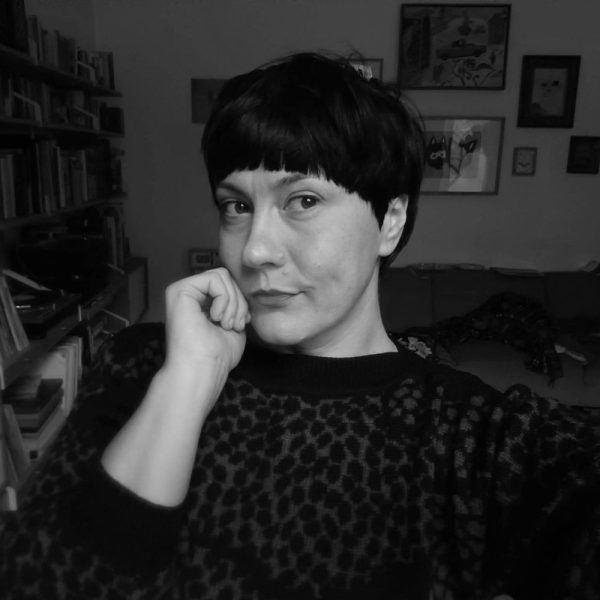
Lea Rasovszky (RO)
Lea Rasovszky (b. 1986) lives and works in Bucharest. In 2008 she graduated the National University of Art Bucharest, Department of Photography and Video, followed by an MA at the same university and department in 2010. In 2024 she graduated doctoral studies at the Art History and Theory departament of the National University of Art Bucharest, with a thesis on drawing and its connection to installation and object.
Her projects highlight the stereotypes and values of the society towards which she has a critical view. Everything is filtered through a rough and ironic style of drawing, oftenly combined with immersive installations that rely on the viewer for the completion of the context.
In 2016, she co-founded the MATKA Association, an association that aims to become involved in social, educational, and cultural activities, while promoting culture and arts in general, with particular emphasis on contemporary art. Matka aims to combine our empathy for numerous disenfranchised communities and the energy of the cultural and creative industries, which are in a process of ongoing growth and expansion.
In the spring of 2020, she co-founded the structure now called Atelierele Malmaison, an intiative supporting affordable spaces for the local artist community, as well as a meeting place for diverse creative entitites. In the current moment, alongside Matka, they are developing a sustainability proposal for connecting state owned spaces and the local artistic community.
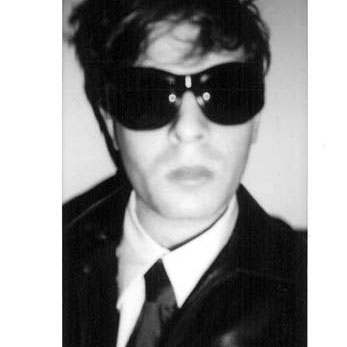
Tudor Ciurescu (RO, CH)
Tudor Ciurescu (b. 1996, Romania) is a visual artist currently living between Lausanne, Switzerland and Milano, Italy after graduating from Ecole Cantonale d’Art Lausanne.
Image and object making stand at the core of his practice. With interest in different narratives such as art history, future paradigms and the collective subconscious. From the intricacies of artificial intelligence to the timeless craft of etching, Ciurescu’s oeuvre transcends traditional boundaries, offering a captivating journey through the evolving language of the younger generation. The academic background in graphics, photography and sculpture is seen in the variety of works and media.
His art becomes a vibrant tapestry that weaves together threads of tradition and modernity, forming an engaging narrative that resonates with the dynamic interplay between the analog and the digital.
He has participated in group exhibitions at the Museum of Recent Art in Bucharest, the Museum of Contemporary Art Bucharest, the Musee d’Art Romain Lausanne and in various galleries in Lausanne, Bucharest, Amsterdam, Paris, Bratislava or Basel.
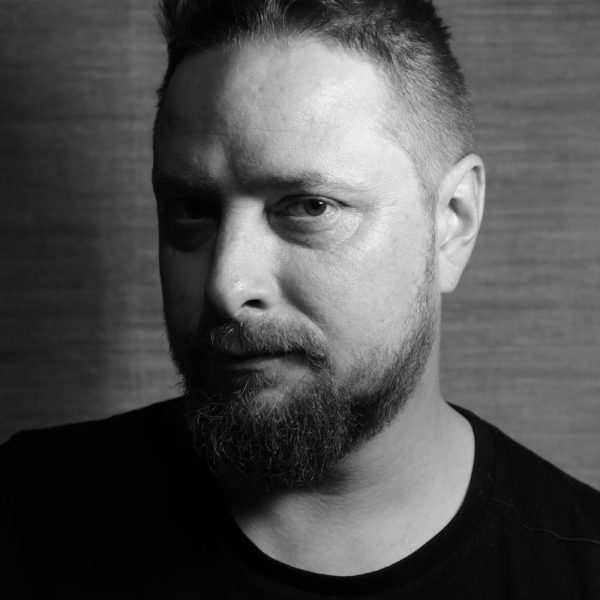
Radu Belcin (RO)
Radu Belcin is a visual artist whose works have been presented internationally, known for a practice centered on figurative painting, exploring the fragility of identity and the tension between interiority and appearance. Through carefully constructed compositions and subtle interventions upon the face, the artist creates images with an introspective atmosphere, in which the human figure becomes the site of psychological metamorphosis.
His painting addresses themes of alienation, memory, and the consequences of a hyper-lucid consciousness, within a visual register marked by intensity and ambiguity. He has exhibited in museums and galleries in Bucharest, Singapore, Berlin, Prague, and Paris.
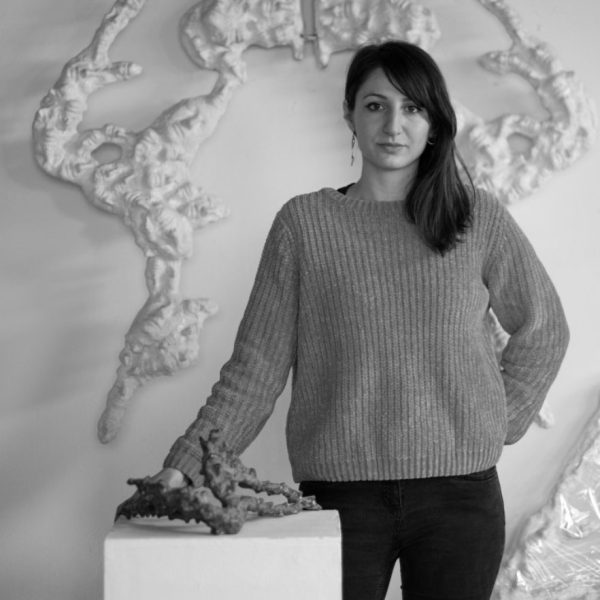
Bianca Mann (RO)
Bianca Mann is a sculptor and graduate of the National University of Arts in Bucharest, holding a Master’s degree in Sculpture under the guidance of professor and sculptor Aurel Vlad. She obtained her PhD in Fine and Decorative Arts with the thesis “The Mask in Sculpture”, supervised by visual artist Marilena Preda Sânc.
Active in the art world through collaborations with Mobius Gallery (RO), H’art Gallery (RO), Go Contemporary (RO), and Galerie#23 (DE), she has participated in numerous solo and group exhibitions, both nationally and internationally.
“Bianca Mann’s formal language is characterized by a modular element — her own face. She initially took an imprint of her face, into which clay was pressed. As it dries, clay contracts by approximately 5%. Bianca then takes a new mold from this second version, which also dries and shrinks by another 5%, and so on, until reaching the smallest version — a kind of synthesis or reduction of identity. The object is constructed from this module, larger or smaller, which is her laughing face. The work is organized in concentric circles, like a flower. One might say that nothing could be hideous. What could be wrong with the face of a young woman multiplied and arranged like a blossoming form? And yet, the repetition of the facial mask becomes unsettling — a ‘too sweet’ effect emerges, reaching a threshold where teratology begins. Too many faces arranged concentrically produce a Gorgon.” (Excerpt from the curatorial text by Dan Popescu for the catalogue “The Monster, the Square and the Roar”, written for the work “Double Shield”, acquired by the Museum of Recent Art. Dan Popescu is a curator, art critic, and gallerist at H’art. He is also part of the board of the Museum of Recent Art in Bucharest.)
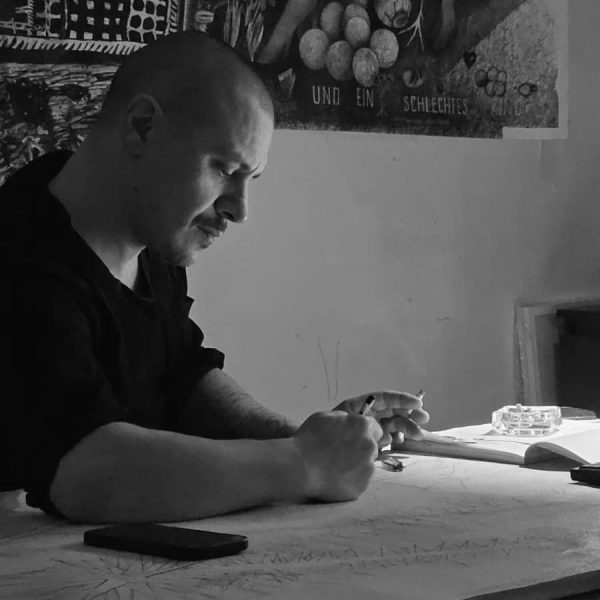
Mihai Negru (RO)
Mihai Negru (b. 1985) is a graduate of the National University of Arts in Bucharest, Graphics Department.
His practice unfolds outside the normative framework of contemporary art, adopting from the outset a critical stance toward convention and its mechanisms of validation.
He rediscovers the what it means to be an artist within the context of art therapy workshops held for people with mental health disorders, where the artistic act becomes simultaneously a medium of expression, reflection, and personal transformation. He works in figurative graphic compositions marked by a punk attitude and an anti-conventional aesthetic. His practice integrates a visceral visual emotion, kitsch, and a direct form of storytelling, suspended between fragility and excess. His works combine mysticism with anarchist and philosophical ideas — particularly Nietzschean ones — exploring tensions between the sexes and gender norms within the posthuman condition of the contemporary world.
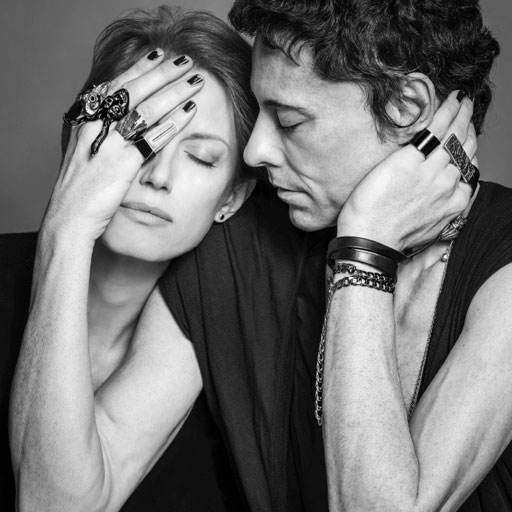
Elena Urucatu și Carlos Maté (RO, ES)
Elena Urucatu and Carlos Maté are a Romanian–Spanish artist duo based in Berlin. Their practice spans objects, sound, video, marine biology, perfumery, mixology, and cooking. They create performative experiments and experiential installations through collaborations across disciplines that often lie outside the realm of art.
Through these collaborations, they propose the construction of a new subjectivity: a radical perspective that transforms our digital, temporary, reference-less selves into vital refuges. Their work generates intimate, obscure, and psychological spaces in the melancholic tension between the universal and the individual. Here, art becomes the only survival strategy in the ruinous moral landscape of late global capitalism—the fragile thread that keeps us connected to a collapsing world.
Exhibited internationally, their projects have been presented at Triennale Milano, Haus der Kulturen der Welt and Círculo de Bellas Artes, as well as in the context of the Ljubljana Biennale, Istanbul Biennial, and Berlin Biennale. Their awards and residencies includenMedialab-Prado and Irish Museum of Modern Art (IMMA).
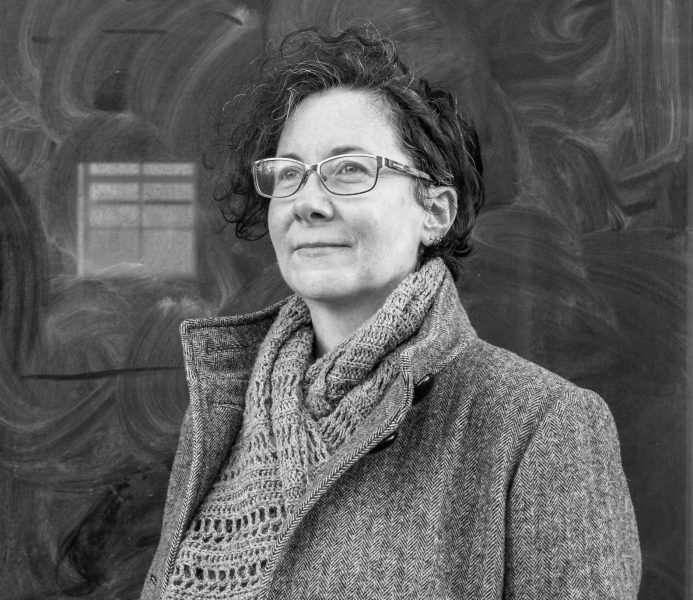
Lynne Hocking (SCT)
Dr Lynne Hocking is an artist and scientist creating sculptural textile objects that tell the stories of her matrilineal ancestors – at least seven generations of weaver-ish women in NE Scotland, UK; and around 50,000 years of migration from the Fertile Crescent region. She re-imagines long-forgotten stories of community, kinship and knowledge-keeping, taking inspiration from genetics and ancestry data; expressed through inherited and acquired knowledge of materials, processes and places.
www.lynnesloom.co.uk
@LynnesLoom (IG)
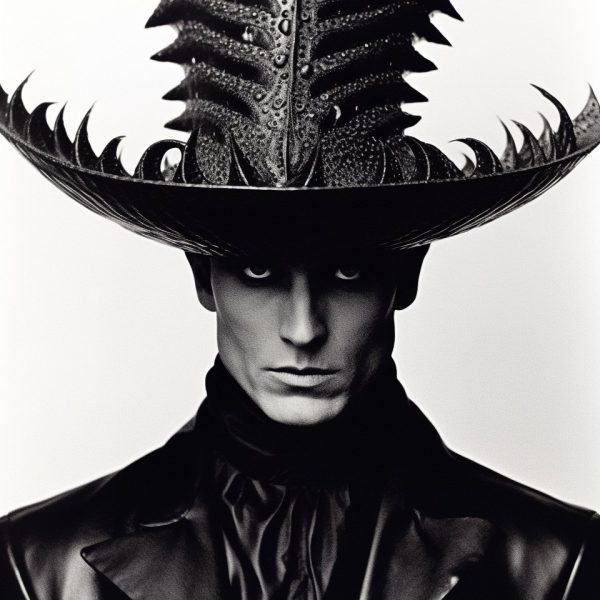
Ghassan Naji (CAN)
Ghassan Naji, known as g0naji, is a Vancouver-based visual artist working with AI as a new visual language. His work explores emotional tension at the threshold between the real and the imagined, creating atmospheric scenes that feel like glimpses into parallel worlds. Through AI-generated imagery and video, he builds fragments of suspended narrative that invite viewers into spaces of ambiguity, quiet intensity, and wonder.
https://g0naji.com/
IG: https://www.instagram.com/g0naji/
X: https://x.com/g0naji
Exhibition Architecture
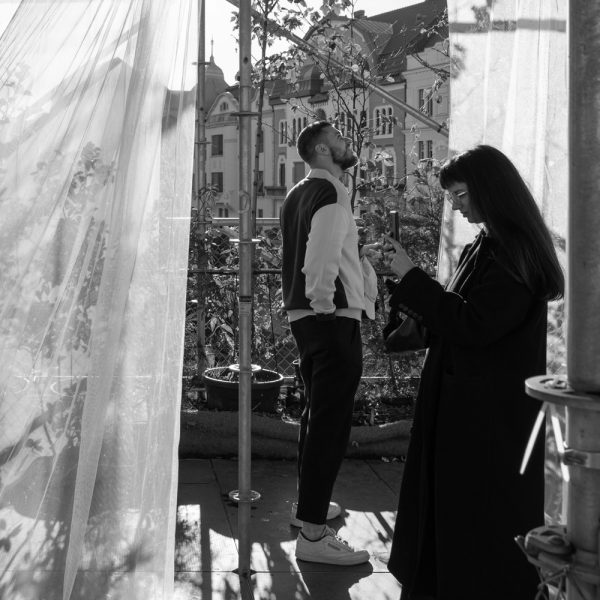
Atelier VRAC
Atelier VRAC is a work group founded by Cristi Bădescu and Zenaida Florea. Their interests lie at the intersection of civic initiatives,education ,research and architecture projects. The moniker VRAC, translating to ‘in bulk’ in English, describes an imagined methodology – the storing and transporting of raw ideas in the form of ‘granules’ or ‘pieces’, stacked together in an unsorted pile.
Curator
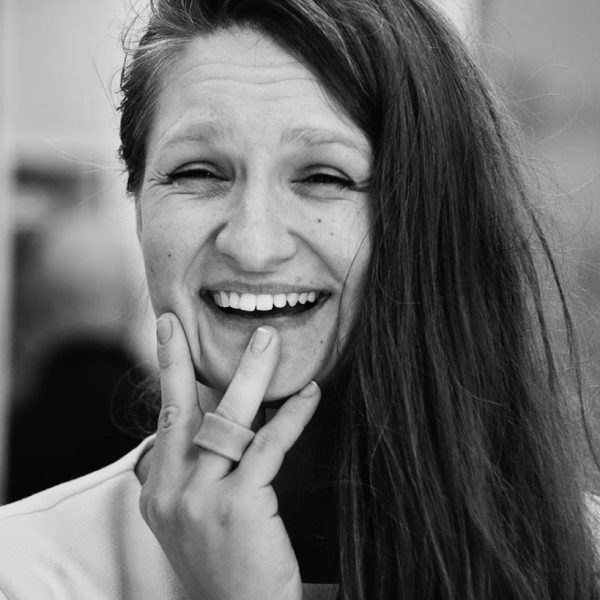
Marlene Herberth
Marlene Herberth works across artistic and curatorial practices, constructing projects as living systems. Drawing from anthropology and vernacular archives, she weaves ritual, fiction, and political fracture into immersive environments where memory is referenced as inspiration for the future. Working with fragments — objects, symbols, textiles, archives — she builds affective architectures that connect microhistories with collective imagination, activating heritage as an infrastructure for transformation. She is co-founder of KraftMade Research & Lab alongside Alex Herberth, creating heritage-led programs from rural Transylvania, where community, landscape, and history are active collaborators in their practice.