
installation
24.5.2025
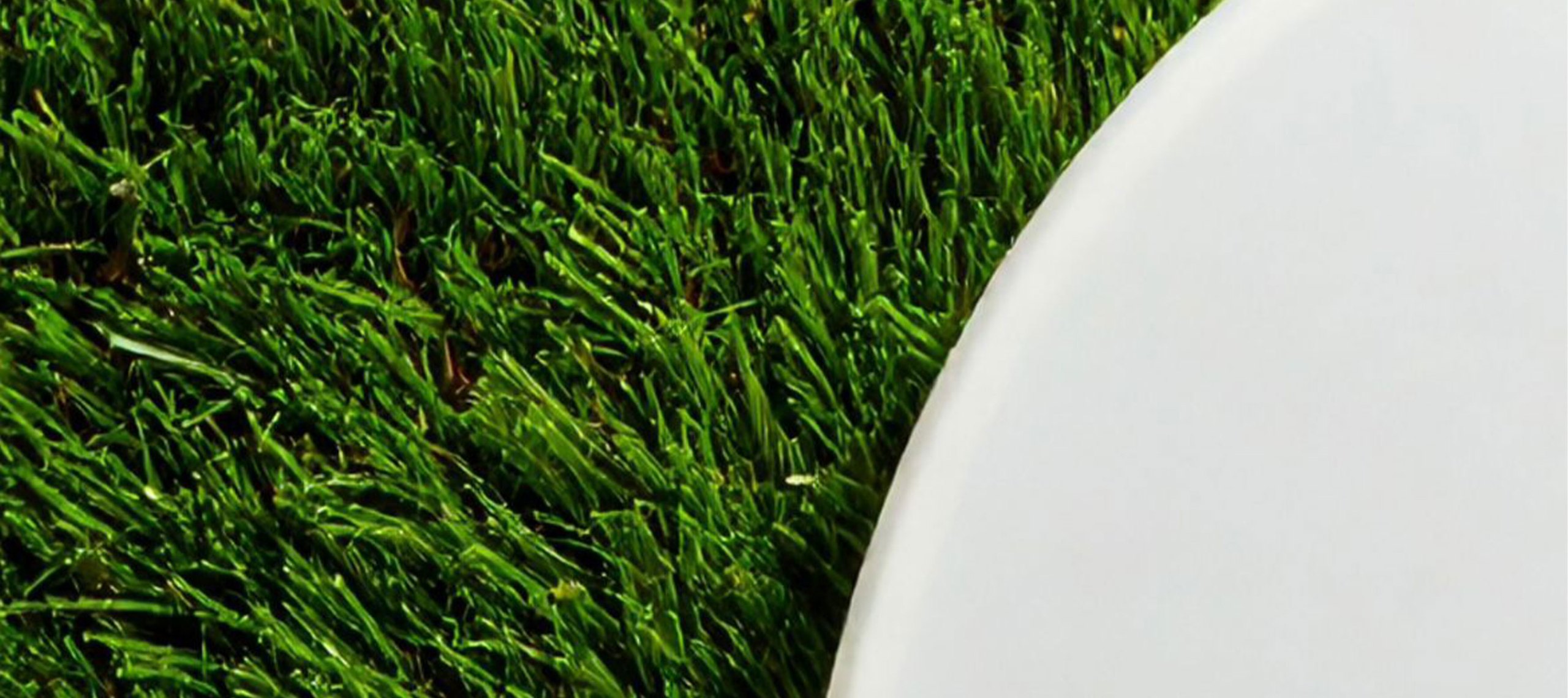

The work explores the boundary between the natural environment and industrial production, highlighting the abiogenic character of manufactured objects. The transformation of a familiar flower, the daisy, into an artificial object placed in the landscape, aims to draw attention to the proliferation of synthetic plants that imitate life, but remain devoid of biological origin. Thus, they become symbols of the manufactured aesthetic.
By contrasting the natural environment with the artificial materiality of the flower, the project challenges the viewer to contemplate the tension between authentic and replica, between organic and manufactured. At the same time, the work suggests a subtle critique of the contemporary trend of replacing natural ecosystems with artificial simulacra – visually appealing, but incapable of sustaining real life, biodiversity or the ecological processes that define the health of the planet.
“Synthetic Daisy” thus becomes more than a visual exercise: it transforms into a commentary on the fragility of the relationship between humans and nature. It highlights the risk of excessive dependence on manufactured environments and the artificial aestheticization of life. In this tension, the viewer is invited to reflect on the responsibility towards the natural environment – the only one capable of supporting authentic life – and on the artificial, limited material that cannot substitute or complement nature.
Artist
Miki Velciov
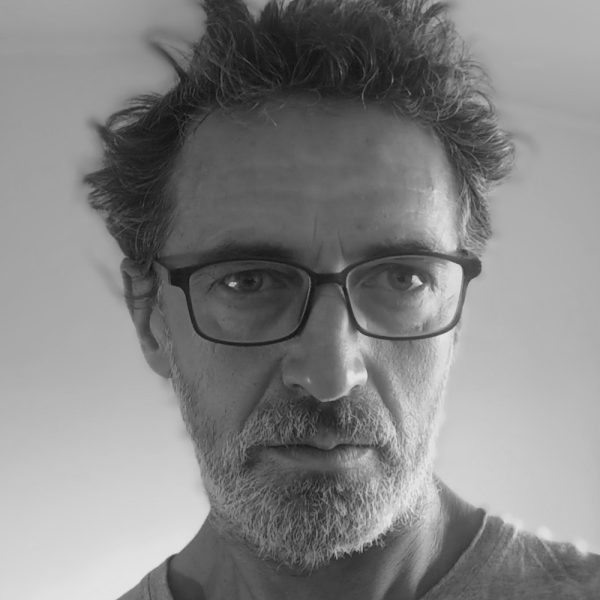
Miki Velciov (born 1968, Dudeştii Vechi, Timiş) lives and works in Timişoara. After a 10-year internship in Rome, in 2010 he began studying painting in the class of professor Cristian Sida, at the Faculty of Arts and Design, West University of Timişoara. Velciov soon diversified his interests by expanding his pictorial layer towards the abstract area of objects, photography and video. His diploma work Dezrădăcinare (2013) is, moreover, a first approach to the anamorphic installation, in which painting combines with natural elements placed in a dynamic context of perception and whose overall image could be perceived from a privileged point of view. The concept of the work demonstrated his concern for current themes, such as the phenomenon of migration as a form of uprooting man from his direct connection with the glia, problematizing the excessive exploitation of natural resources and pollution that destroys habitats, impoverishes the population and chronicles the phenomenon of migration.
Starting with 2014, Velciov begins the series of anamorphic installations with a privileged point of view, such as Big Brother (2014), Oculus (2015, 2016) and Shock Wave (2016), revealing the omnipresence of surveillance systems as a form of excessive control typical of totalitarian societies. At the same time, in the works Im cub de viaţă (2015), Vedere interiioră (2015), In Terra Pax (2016), or Sunet interior (2015), he x-rays the more or less visible layers of reality by studying the primordial elements of nature, such as earth, water, air, fire, proving an obvious concern for nature. So that, through the fusion of the two directions, in the interventions Turgidum (2018), or Triandră (2019), the anamorphic installation is extended to the scale of the landscape, relating the illusion of absolute control and the impossibility of the utopian perfection of totalitarian systems to the unbeatable perfection of the cyclicity of nature.
In the context of the global crisis, Velciov is becoming increasingly aware of the essential difference between temporary or permanent interventions in nature, in which he implements constructive elements related to the scale of the landscape, and land art interventions proper, in which he artistically reorganizes the resources of the place until their complete return to the landscape. Both interventions, however, fall within a broader category of site-specific art practiced by Velciov, both outdoors, in wild habitats (Pădurea Verde, the banks of the Cerna River, the shores of the Black Sea, the Subuleasa Canal, the agricultural field at Saravale, the pasture at Gărâna, etc.), and indoors, in disused spaces that are not part of the cultural circuit (The Battery Factory Tower, STPT Workshops). Also, with the anamorphic interventions in the landscape, Velciov grants the audience an important role, by placing them in a privileged point of perception of the entirety of the work, and in the participatory land art interventions, such as Labirint, Balans, Râul de la Dealul Cerului and Biodiversitat de la Apoș, the audience becomes an integrated part in the construction of the work and in the reception of the artist’s message regarding the ecology and critical thinking of contemporary art.
We can say that Velciov is gradually globalizing his area of action, proving national and international expertise and recognition in the field of land art through participation in exhibitions and residencies, such as the Botanical Garden and the National Museum of the Romanian Peasant + C in Bucharest (2023), Electro Global Cluj (2023), Musée LAB Angers (France, 2022), Balchik and Dazhdovnitza (Bulgaria, 2022), Cugesles-Pines (France, 2021), Gabrovtsi (Bulgaria, 2021), Cetate Arts Danube (2019), Méricourt, (France 2019), Villatalla, (Italy 2019), Adata AIR Plovdiv (Bulgaria, 2018), Danube Dialogue Novi Sad (Serbia, 2018), Rusenski Lom Natural Park Nisovo and Process Space Art Festival Russe (Bulgaria, 2016).