
Acces liber
2026
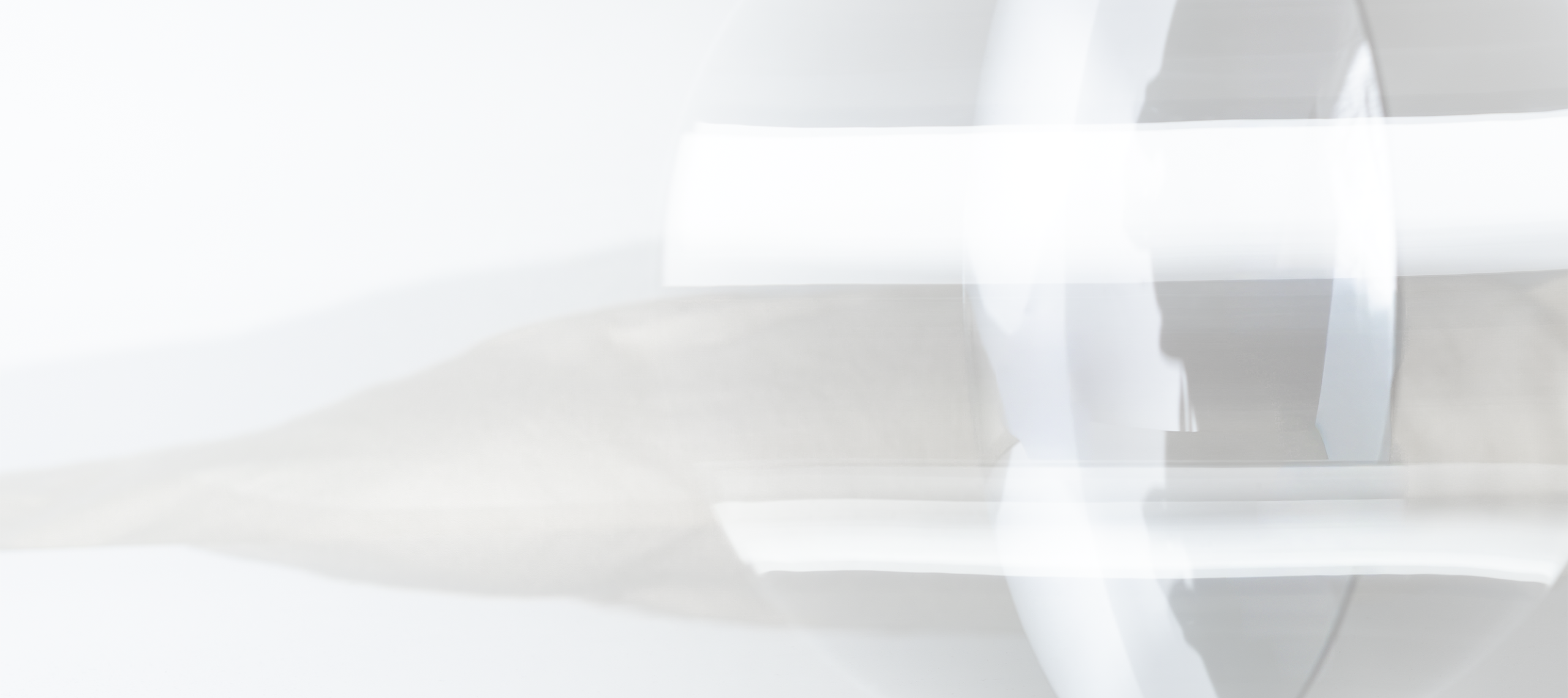
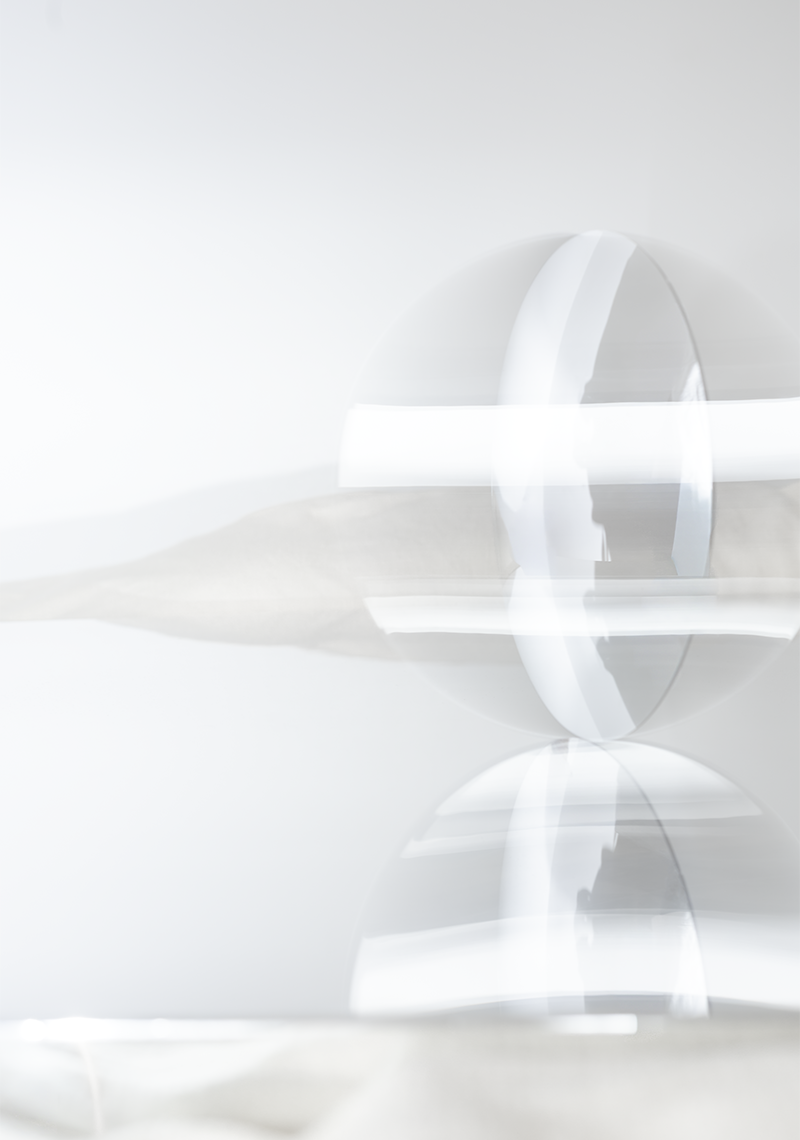
The artistic project The Mirror Stage is part of a research process begun six years ago, alongside the development of doctoral studies at the National University of Arts in Bucharest.
Grounded in the studies of Jacques Lacan, Didier Anzieu, Giorgio Agamben, and Emanuele Coccia, the thesis The Sartorial Self (Eul vestimentar), publicly defended on November 1, 2025, investigates the cultural, psychological and, especially, aesthetic effects of the mirror upon the human subject.
Lacan’s theory of the “mirror stage” was inspired by the earlier works of psychologist Henri Wallon, but was constantly criticized by Norman N. Holland and Raymond Tallis. The recognition of the face in the mirror, whether it occurs at six or eighteen months, represents a paradigmatic model of what Lacan called the “imaginary register.” Throughout his entire career, Lacan continued to refine his theory, such that, around the 1950s, it became sufficiently abstract for the “mirror” to function more as a metaphor for an observed behavior than as a literal device.
The dialectical revolution of nickel-plated surfaces and mirrors—flat, concave, or convex, in all their shapes and sizes—which expose and overexpose the image of reality, but especially the image of one’s own self, only accentuates the permanent tension between gaze and reflection, between what is offered as an image and what is internalized as identity. Nickel-plated surfaces thus become spaces for negotiating the self, where the subject seeks, extends, recognizes, and, at the same time, loses themselves in the multiplication of their own projections.
In this play of reflection, reality is no longer merely rendered, but distorted, amplified, and reconfigured, and the image of one’s own self ceases to be a stable benchmark, transforming into a fragile construct, always dependent on angle, light, and distance. Because “this is, perhaps, the great little secret that mirrors have kept for centuries: they teach us that any image—the sensible as such—is the existence of a form outside its place. Any form and any thing that comes to exist outside its place becomes an image.” (Emanuele Coccia, Sensible Life, p. 30).
In this spectacle of reflections and consumption, maintained with remarkable efficiency by the beauty industry and by what could be called a class of style “iatromantis,” a secular religion of hypervisibility is established. This enables a colonization of the subject that no longer operates through direct constraint, but through aesthetic seduction and continuous self-exposure. We thus find ourselves before a form of aesthetic domination that can be described as a veritable “visual terrorism,” which imposes a discipline of visibility in view of total domination: “Those who make themselves visible are the ruled, not the rulers. Disciplinary power makes itself invisible, while imposing permanent visibility on those who are subject to it. To ensure access to power, the subjugated are exposed in the spotlight. That being-seen uninterruptedly keeps the disciplinary individual subjugated” (Byung-Chul Han, Topology of Violence, p. 114). In this framework, exposed individuals utilize the Sartorial Self—in its extended and hyper-signified form—as a tool to obtain a surplus of visibility. However, this strategy produces only an illusion of power: an inverted power, specific to those who become aesthetically predictable and, precisely through this, easier to integrate into mechanisms of symbolic control. Those who are seen employ the Sartorial Self, in its extended form, to obtain even more visibility.
In this theoretical climate, the exhibition The Mirror Stage extends, in an intimate and caricatured manner, the effect of multiplication and glorification of one’s own image, as well as of a Sartorial Self that aspires to become our very idea of Image—a space that exposes an intermediate nature, a rhizomatic exile.
Setup architect
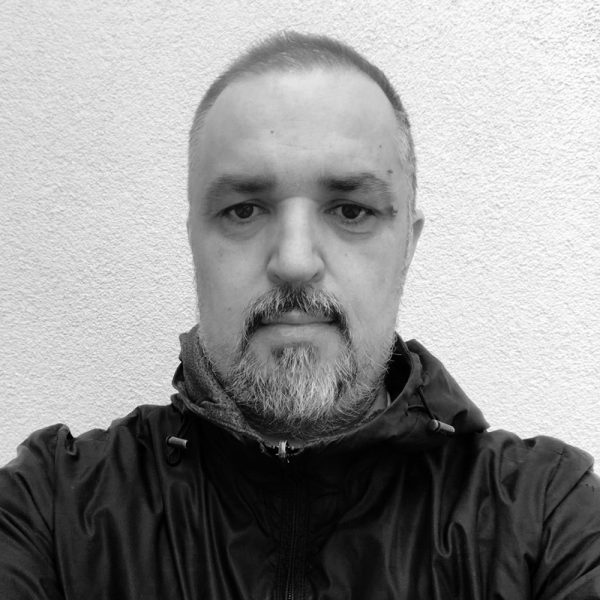
Robert Marin
He co-founded the design and architecture office Square One in 2001, where he served as lead architect, and co-founded the design and architecture office Nuca Studio in 2008, where he currently serves as lead architect.
A few distinctions and participations in major events: 1st Prize for Interior Architecture at BAB, the Henkel Art Award, participation in the Nature Design exhibition for Museum für Gestaltung Zurich, works published in specialized books and magazines edited by Frame Publishers, Taschen, Lars Müller Publishers, Gestalten.
Curator
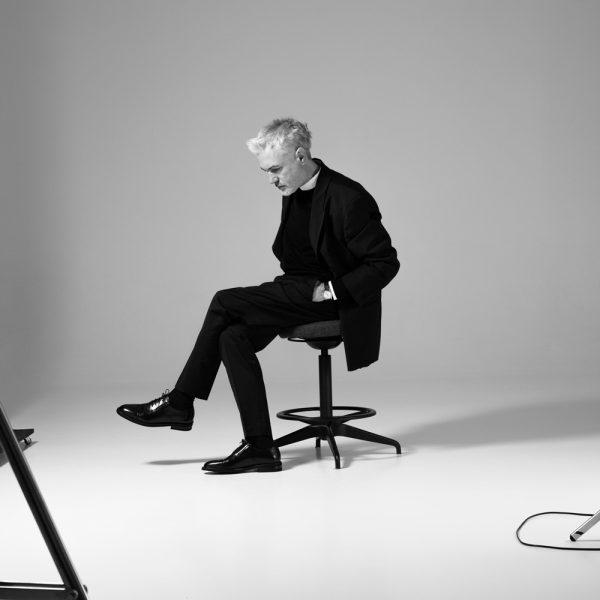
Marian Pălie
Marian Pălie (b. 1978) lives and works in Bucharest, Romania. From an early age, he developed an interest in contemplative aesthetics, an inclination supported by his subsequent studies in philosophy, theology, and cultural anthropology. He holds a degree in philosophy and theology with a thesis on “Post-Anticipations of Modernity,” a master’s degree in fashion and costume strategies (2013), and a PhD in Visual Arts from the National University of Arts in Bucharest.