
24.5.2025
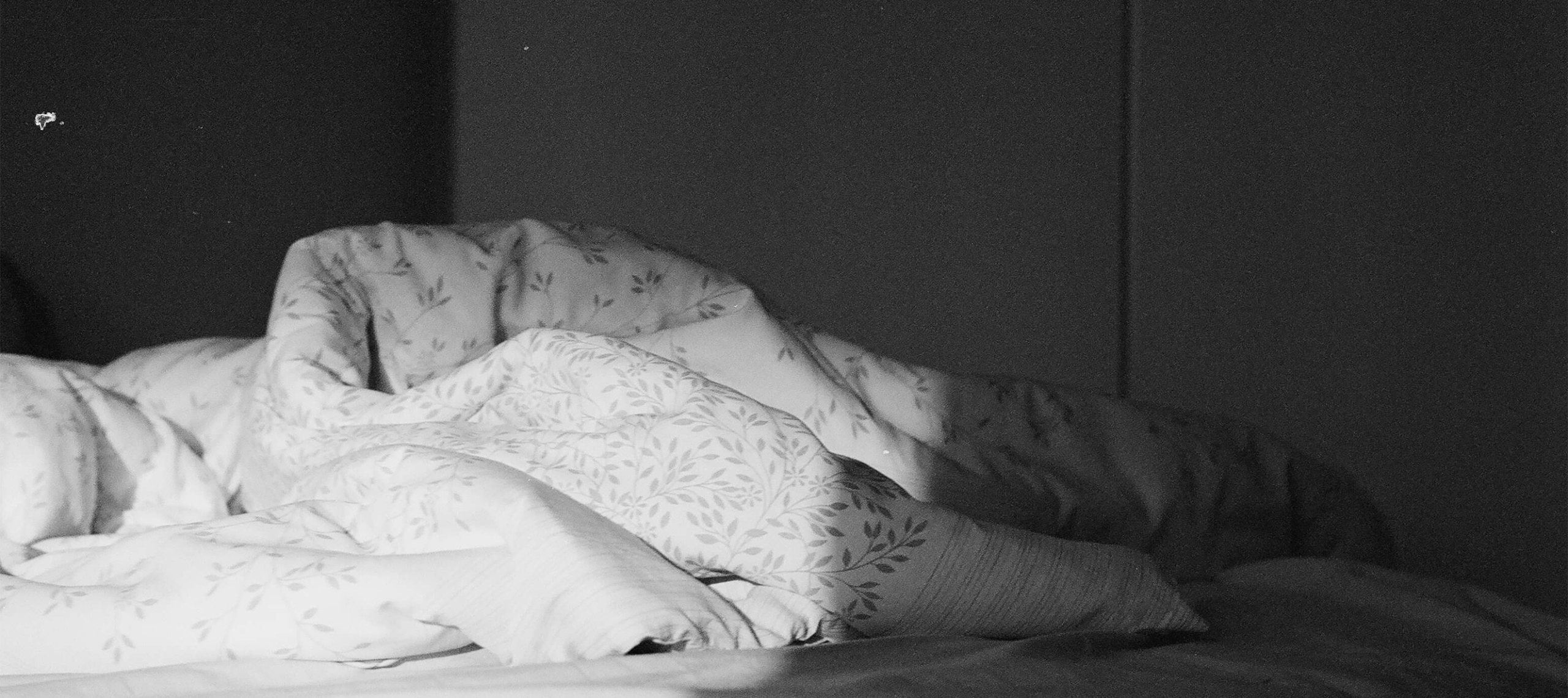

There is an absence that does not signify lack, but rather a restructured presence, a calm and delicate persistence. There is a silence that does not cancel or negate, but evokes or even institutes. In the exhibition The Shadow to my Light, the elegant photographs taken by Ingrid Dan construct a visual territory where time appears simultaneously implacable and suspended, and the metaphysical and emotional weight of the unseen behind the visible commonplace is more enveloping than oppressive. Thus, Ingrid Dan’s black-and-white, poetic, and intimate photographs generate a melancholic atmosphere, but in an unusual way: beauty seems to sublime the element of regret within the melancholic disposition and infuse it with a vague joy.
Her works speak of fragility, memory, and the affective traces that, paradoxically, the passage of time facilitates yet also blurs. The artist scrutinizes the seemingly mundane, but with an emotional acuity that becomes a transformative force: objects, gestures, insignificant and unpretentious corners of reality subtly, almost stealthily, become visual metaphors for duration, for the soul’s relationship with the personal and collective past. Presence is often invoked through absence. Human figures insinuate themselves discreetly or are substituted by empty spaces, shadows, or relics. The person is replaced by the trace, the sign, the gesture, the object, but through this, the person does not lose their affective power or emotional relevance. The person becomes a trace, while the past, as an impersonal mode of time, is personalized as memory, and the raw object becomes a memento. And all these attributes are circumscribed by the essential quality of photography of rich aesthetic capacity and profound sophistication: that the images in Ingrid Dan’s photographs are not so much representations as they are, above all, presences—not so much memories as they are actualizations.
This actualization of memory is technically and conceptually supported by a deliberate choice of the analog medium. In a digital era, Ingrid Dan, an artist with rigorous training in art history and a refined intellectual curiosity, opts for a hands-on approach, manually processing the film as an act of resistance against contemporary speed. This slow process allows the image to become a temporal binder, a bridge between a past that has been consumed and a present that affectively recovers it. Influenced by the aesthetics of memory explored by artists such as Francesca Woodman, Vivian Maier, or Nan Goldin, Ingrid Dan does not document reality, but transfigures it.
A central element of her visual discourse is the re-semanticization of vulnerability. Moving beyond the romantic idea of the ruin or pure ephemerality, the artist embraces the concept of antifragility theorized by Nassim Nicholas Taleb. In her vision, fragile objects are defined by an intrinsic capacity to resist chaos and time through their very emotional charge. Thus, the daily commonplace—the intertwining of the beautiful and the ugly, the spectacular and the mundane—acquires a magical aura, becoming affective relics.
In the visual economy of the exhibition, the motif of the empty chair or bed becomes paradigmatic for this poetics of absence. The object ceases to be strictly functional, transforming into a space of waiting suspended between presence and lack, carrying a meditative, almost funerary charge that silently interrogates. When the human figure does appear, it is often fragmentary or hesitant. The image of feet touching the chair with the toes, without fully sitting, conveys a state of instability and a refusal of definitive anchoring. It is a “ghost of memory,” an evanescent presence suggesting a continuous hesitation between worlds—between being and having been—where vulnerability becomes, paradoxically, a form of aesthetic strength.
Ultimately, Ingrid Dan’s endeavor does not seek to provide definitive answers, but to open a space for silent rediscovery. In a world marked by entropy, her photographs offer a secret promise: everything that is sheltered in affect and beauty can escape the flow of time, reaching a form of timelessness.
Artist

Ingrid Dan
(b. 2000, Sighetul Marmației) lives and works in Cluj-Napoca, being a graduate of the History and Theory of Art department at the University of Art and Design in Cluj-Napoca. Her artistic profile is defined by a refined sensibility and a rigorous intellectual curiosity, evolving from experiments in graphics toward a fully committed photographic practice, where the manual processing of film becomes an extension of the creative act.
With a singular artistic spirit and a sophisticated creative personality, Ingrid Dan explores time and memory, insisting on what persists after disappearance. She creates intimate compositions that capture people, objects, and scenes from the fabric of daily life. Her photographs invest ordinary objects with the status of affective relics, charged with a poetic aura, highlighting fragility not as ephemerality, but as a form of antifragility.
In her compositions, often in black and white or muted tones, the human presence is subtly invoked through evanescent gestures that suggest a hesitation between worlds. Her images are not mere representations but become temporal binders between past and present, vehicles of a collective memory that sublimes melancholy into a form of aesthetic timelessness. Ingrid Dan debuted as an exhibiting artist in 2025, within the “Praxis! Emergent Curator’s Days” event, with the exhibition All is gone, and it all lingers, curated by Xenia Tinca, her works demonstrating a sophisticated capacity to transform the raw object into a memento and memory into continuous presence.
Curator

Xenia Tinca
(b. 1997, Gheorgheni) is a graduate of the Bachelor’s degree in Art History and Theory and the Master’s degree in Contemporary Curatorial Practices at the University of Art and Design in Cluj-Napoca, where she is currently conducting her doctoral research. An art historian, curator, and educator, she is a professional dedicated to exploring and communicating contemporary art through sensitive and collaborative curatorial practices. With a solid academic background in art history and theory and a professional path that combines project management, research, and artistic education, Xenia has coordinated and curated numerous exhibitions in diverse cultural spaces, from museums (Cluj Art Museum) to galleries or independent art spaces (Quadro Gallery or La Cave – the French Institute in Cluj, where she managed the curatorial program for a period of one year). In 2025, she curated as part of “Praxis! Emergent Curators Days.”
Her activity is notable for promoting emerging artists, building coherent curatorial narratives, and involvement in all stages of organizing an artistic event—from research and text writing to the logistics of transporting works and communicating with partners. In parallel, she has contributed as an art journalist, providing critical analysis and interviews that bring contemporary art closer to the public.
Currently, Xenia combines theoretical reflection with curatorial practice, focusing on themes related to historical trauma and visual memory. Empathic, rigorous, and dialogue-oriented, she builds meeting spaces between the public, artists, and ideas, where art becomes a living channel of cultural communication.