
2026
The world is filled with meanings through words, it becomes habitable only when it is named. Wittgenstein states that meaning emerges from the use of words, and Heidegger teaches us that language is the house of being. Words are therefore instruments for the production of meaning. They not only describe the world, but also structure it, transform it into a space in which (we) can communicate and in which human existence becomes possible outside the danger of losing ourselves completely and irrevocably in nothingness.
And yet, in the case of the most profound experiences of existence, words often seem insufficient. Trauma, desire, intuition, inner transformation or bodily memory often operate in a register prior to or external to discourse. They persist in us in the form of mental images, gestures or presences difficult to translate into words. In these areas of opacity of experience, language loses its authority, and the image becomes a privileged territory of expression. At the same time, everything that is put into words is limited by definition, so we have access to knowledge only partially, always fractured, never completely. We can only intuit what lies beyond the boundary of the word or we can explore possible ways of understanding everything that cannot be expressed through the linguistic tools we use every day.
The exhibition Beyond Words. Unspoken Stories investigates moments and states experienced in the sphere of the ineffable and invites us to travel a territory of experiences that exist beyond discourse. Equally, the exhibition proposes a reflection on the limits of language and on the capacity of the image to explore what cannot be spoken. The body, space and materiality become carriers of untold stories, catalysts of moments of grace, impossible to capture in definitions.
In contemporary culture, language seems to have become the dominant medium through which reality is explained, organized and interpreted. Continuous flows of information, public discourses, social networks and the proliferation of images produce a space saturated with explanations, comments and narratives. In this context of hypercommunication, experience seems to be immediately translated into words, interpreted and recontextualized in a permanent circuit of meaning. And yet, within this discursive noise, experiences persist that resist formulation. Emotions, memories or inner transformations often escape language and continue to exist in a register that is more difficult to articulate, where image, gesture and/or materiality become alternative forms of expression.
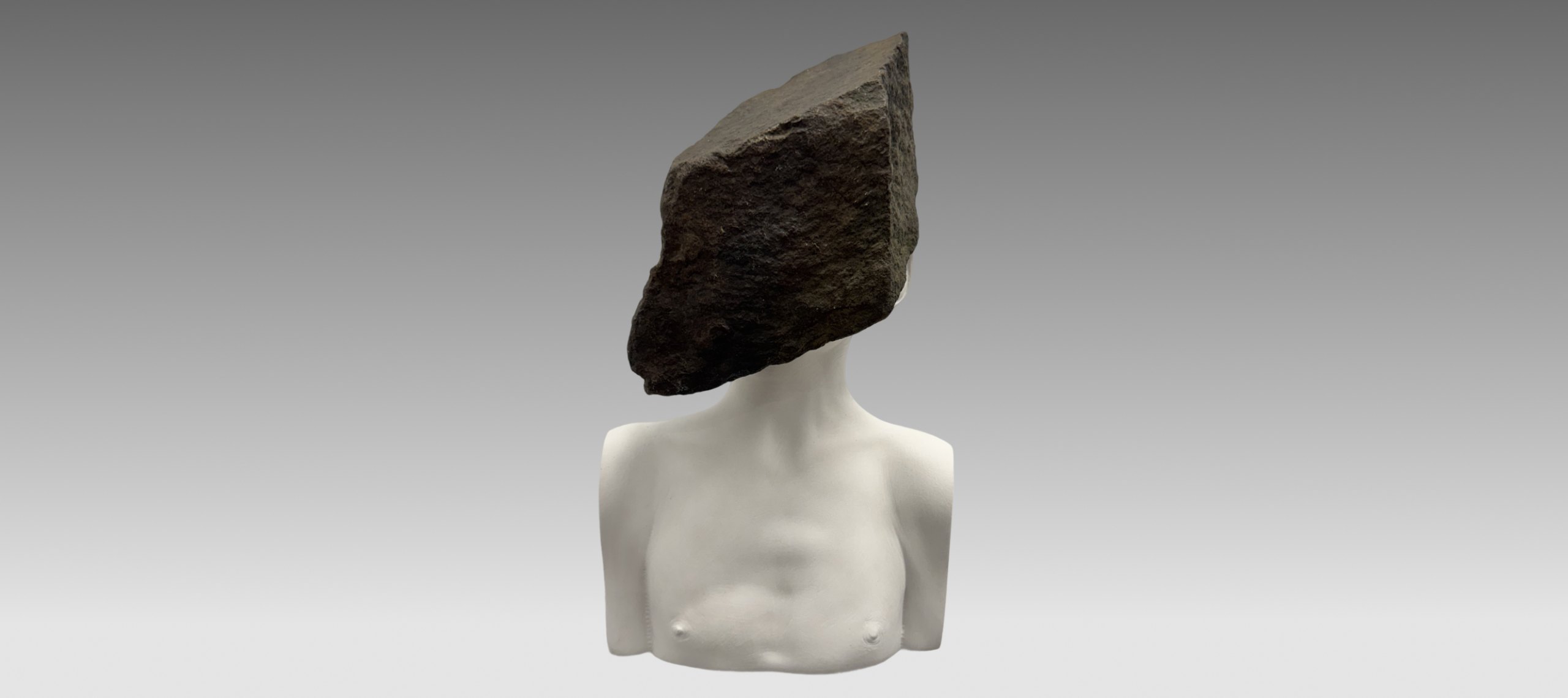
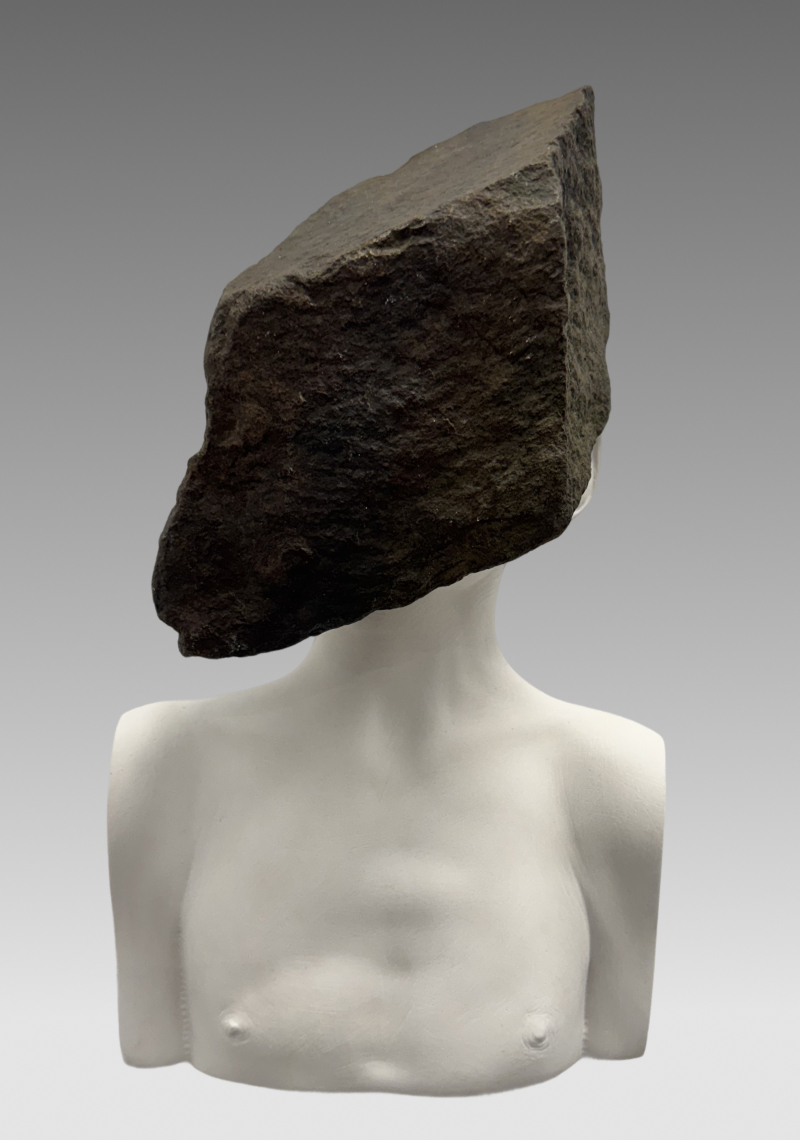
In many of the works presented, the human figure appears in a state of instability or fragmentation. The body is partially hidden, absorbed in a geometric space or suspended in an ambivalent situation between interior and exterior (Mircea Suciu). The face, the privileged place of identity and expression, is sometimes absent, annulled or eclipsed, and the gesture becomes the main vehicle of meaning. These images reflect a contemporary condition in which the subject is faced with the difficulty of formulating his or her own experience within existing symbolic structures.
In parallel, other works introduce architectural structures or monumental forms that evoke spaces of memory and reflection. These constructions function as symbolic places in which individual and collective experiences are preserved in the form of latent tensions. In the absence of an explicit narrative, space becomes the carrier of an energy that suggests the existence of invisible histories.
Materiality also plays a central role in the exhibition’s economy. Objects and sculptural interventions transform matter into a support for bodily and/or affective experiences. The body becomes a fragment, a relic, or a support for an intervention that modifies its identity, suggesting that human experience is not only discursive, but deeply inscribed in the body and matter.
Through this diversity of approaches, the exhibition proposes a broader reflection on the relationship between image and language in contemporary culture. If discourse tends to stabilize meaning and produce coherent narratives, the image remains open and ambivalent. It does not fix meaning, but maintains it in a state of possibility, inviting the viewer to actively participate in the process of interpretation.
A defining element of this exhibition is the fact that the works presented come from the Cicirean Collection, a collection that was established over time as a continuous process of reflection on the world and on one’s own experience. In this sense, a collection can be understood as a particular form of visual narrative. Each work integrated into a collection marks a moment of encounter between the collector’s sensitivity and the artist’s universe, between a personal experience and an artistic form capable of reflecting or provoking it. Viewed together, these works compose an archive in which the aesthetic dimension intersects with the biographical one, transforming the collection into an open visual diary of the one who builds it.
In this context, Beyond Words. Unspoken Stories does not propose a unitary narrative, but a constellation of images that invites the viewer to reflect on the way in which human experiences circulate between image, memory and language. In a world dominated by discourse, these works suggest that there are forms of knowledge and expression that cannot be reduced to words and that continue to manifest themselves through images, gestures, and visual structures.
Thus, the exhibition proposes an experience of looking in which meaning is not established in advance, but is gradually constructed, in the relationship between image and viewer.
Artists
Curators
Ștefania Dobrescu
Ștefania Dobrescu is an art historian, curator and cultural entrepreneur, with experience in cultural project management and curatorial practice. Since 2015, she has been actively involved in the arts sector, working in both public and private institutions.
Throughout her career, she has developed and coordinated a diverse range of exhibition, educational and editorial initiatives in Romania and internationally. Her work focuses on contemporary art from Eastern Europe and the development of sustainable cultural strategies.
She is particularly interested in facilitating relevant connections between artists, institutions and the public, contributing to increasing visibility and stimulating critical discourse around contemporary artistic practices.
Roxana Tolici
Roxana Tolici is the founder of the Mobius gallery, a manager and creator of cultural content, with a special sensitivity in the development of the urban community of which she is a part. She combines literary creation and visual arts in exhibition and editorial projects that focus on the creative possibilities in which the reader-spectator obtains new knowledge and a deeper understanding of human nature. Among the most important such projects is the anthology of short prose, published in 2014, under the title “Double Exposure”, an editorial approach unprecedented at that time on the Romanian cultural scene, in which the creative meeting between ten writers and ten contemporary artists was facilitated. The project was resumed in 2024, under the title Double Exposure to the Feminine, being exclusively dedicated to female creative voices in Romanian contemporary literature and art. In the same year, she initiated, together with Ștefania Dobrescu, the Ecaterina Vrana Awards for Young Female Artists (P.E.V.A.), a long-term project dedicated to supporting emerging artists.
In addition to the exhibition program formulated within Mobius, Roxana Tolici also initiated the first visual circle in Romania, under the title AIEVEA, as well as a series of public conferences – “Mobius Art Talks” and “How Deep Is Your Art?” – intended to facilitate public access to a better understanding of the phenomenon of contemporary art.
In the fall of 2024, she founded, together with Ștefania Dobrescu, a unique space in Romania, dedicated exclusively to works on paper, launched on the art scene under the name Salon de Papier, by Mobius x Cartierul Creativ.